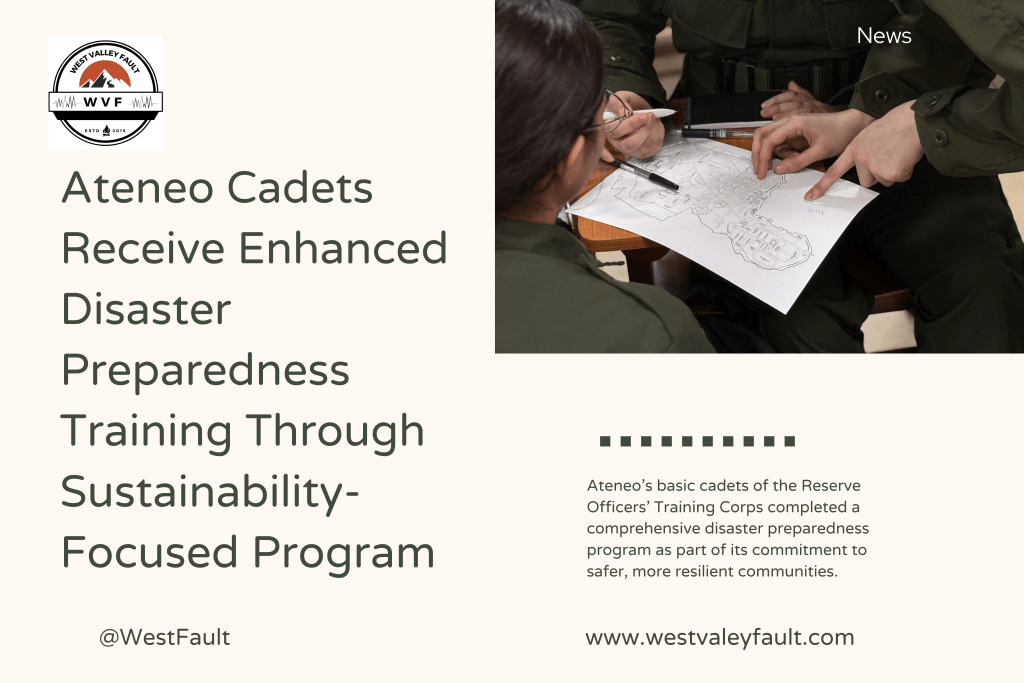
Ateneo’s commitment to building safer, more resilient communities was once again highlighted this November as basic cadets of the Reserve Officers’ Training Corps (ROTC) completed a comprehensive disaster preparedness program led by the Ateneo Institute of Sustainability’s Climate and Disaster Resilience (CDR) team. Held on two consecutive Saturdays, the annual training continues a long-standing partnership between the CDR Program and the Ateneo NSTP-ROTC under the Integrated Ateneo Formation (InAF) framework.

Scan the QR code to get this post on the go.
This year’s program placed strong emphasis on disaster literacy, situational awareness, and practical risk assessment—skills that have become increasingly vital for young leaders. The sessions were designed around four core learning outcomes: understanding disaster concepts, mapping surroundings, recognizing potential hazards, and practicing appropriate emergency responses.
CDR Program Head Daniel C. Ratilla opened the training with a deep dive into the factors that shape disaster risk, including exposure, vulnerability, capacity, and natural hazards. Participants also explored the importance of resilience and sustainability, learning how institutions can strengthen their ability to withstand and recover from different crises. The training underscored a powerful message: disasters are not “natural,” but the result of risks created by human decisions and environments.
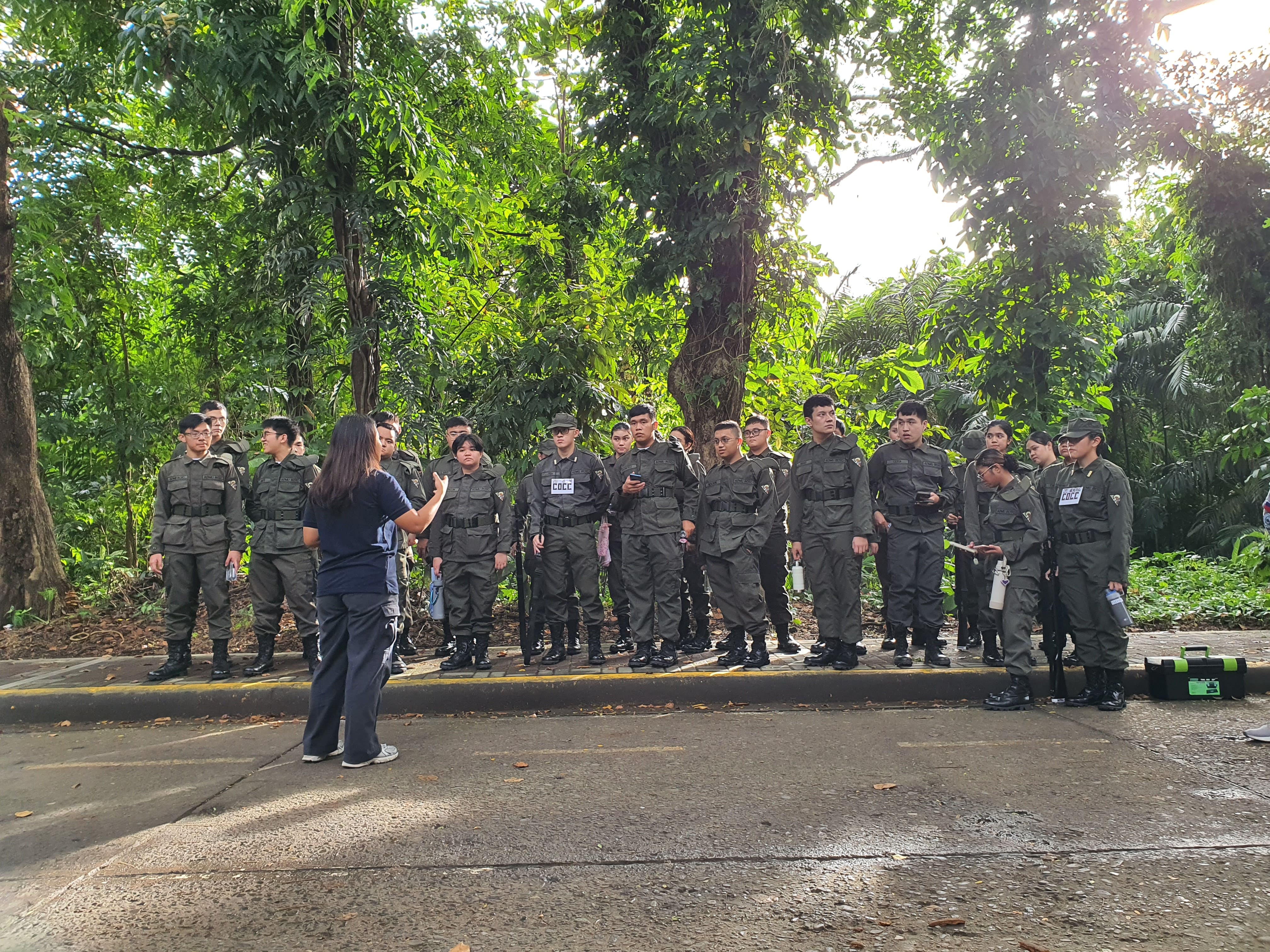
Cadets then took part in a dynamic mapping activity aimed at sharpening their familiarity with the campus. They identified key buildings, access points, safe zones, and areas that could pose danger during emergencies—while also orienting themselves using cardinal directions.
To maximize learning, the group was split into two cohorts. The classroom cohort focused on emergency protocols for earthquakes, fires, and medical incidents. They also learned to use digital hazard tools such as HazardHunterPH, Project NOAH, and GeoAnalyticsPH, strengthening their capacity to assess risks in real time.
Meanwhile, the field cohort explored the campus with the AIS team and disaster literacy specialists. Using the FaultFinder mobile app, they located the nearest point of the West Valley Fault, followed by a visit to vantage points overlooking Marikina City and Rizal Province for group-based risk assessments. The team also inspected campus emergency stockpile containers and visited designated Emergency Assembly Areas (EAAs), reinforcing their understanding of real-world disaster response scenarios.

Both groups later reconvened for a briefing on the Campus Emergency Management Plan, led by CDR Program Officer Ivy Geraldine Ferrer. The orientation outlined how the University coordinates emergency response through structured teams like the Local Unit Emergency Response Team (LUERT) and Building Emergency Assistance Team (BEAT), and how preparedness drills are activated campus-wide.
On the following Saturday, the cohorts switched roles to ensure every cadet experienced both the field and classroom components. The program concluded with a synthesis session, allowing participants to reflect on new skills, tools, and protocols learned through the two-week engagement.
Ateneo’s sustained investment in disaster education highlights the institution’s vision of empowering students not only as future military officers but also as informed citizens prepared to lead in times of crisis.
Source: AteneodeManila











 West Valley Fault
Leave a comment