
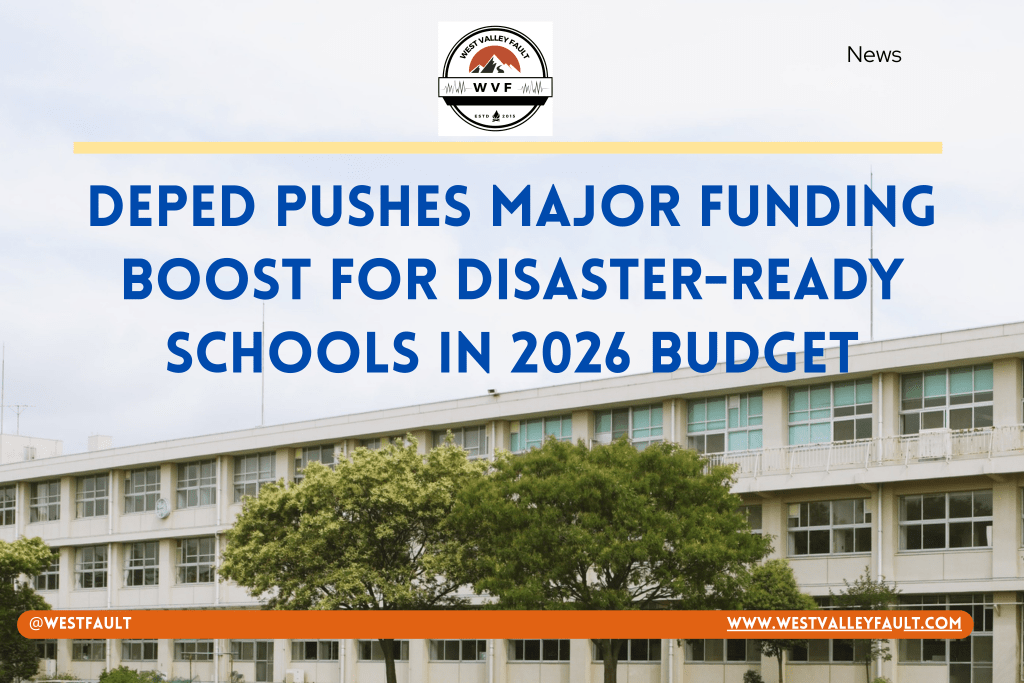
The Department of Education (DepEd) is seeking a significant increase in funding to strengthen disaster preparedness and climate resilience in public schools, reflecting the growing impact of natural hazards on learning across the Philippines. With typhoons, earthquakes, and flooding increasingly disrupting classes, the proposed 2026 budget places school safety and rapid recovery at the forefront of national education priorities.

Scan the QR code to get this post on the go.
Under the Senate’s version of the 2026 General Appropriations Bill, DepEd’s Disaster Preparedness and Response Program (DPRP) is set to receive P3.77 billion—nearly a fivefold increase from the amount initially proposed in the National Expenditure Program. Education Secretary Sonny Angara said the move responds to the country’s exposure to repeated disasters, which have led to frequent class suspensions and left many school buildings in urgent need of repair or reinforcement.

The expanded DPRP funding is intended to improve emergency readiness, speed up repairs in disaster-affected areas, and help schools resume classes more quickly after calamities. While the allocation is still subject to approval by a bicameral conference committee, DepEd emphasized that the proposal aligns with ongoing reforms aimed at making schools safer, more inclusive, and more resilient to climate risks.

Source: DailyTribune
Among these initiatives is the use of digital planning tools such as the PlanSmart for Safe Schools web application, which supports data-driven contingency planning. DepEd has also rolled out the M7X School Ready Program to certify earthquake-ready schools near the West Valley Fault, alongside the Safer Learning Facilities Guidebook that promotes child-friendly and disaster-resilient school design.
To minimize learning disruptions, the department continues to expand alternative learning solutions, including the Dynamic Learning Program and EduKahon kits. In areas severely affected by disasters, DepEd is preparing to deploy Learning Continuity Spaces—modular, prefabricated classrooms that can be quickly assembled while damaged school buildings undergo repair.

Beyond emergency response, DepEd is also investing heavily in long-term resilience through the Infrastructure for Safer and Resilient Schools (ISRS) Project, which carries a proposed budget of P9.39 billion. Implemented in partnership with the World Bank, the program aims to rebuild and upgrade thousands of school structures to withstand stronger typhoons, flooding, and earthquakes. Once completed, the project is expected to benefit more than 740,000 learners nationwide.
DepEd said the combined focus on preparedness, rapid recovery, and resilient infrastructure is designed to break the cycle of recurring damage to schools each year. Final funding levels for both programs will be determined once lawmakers reconcile the House and Senate versions of the 2026 national budget.
Source: DailyTribune


















 West Valley Fault
Leave a comment