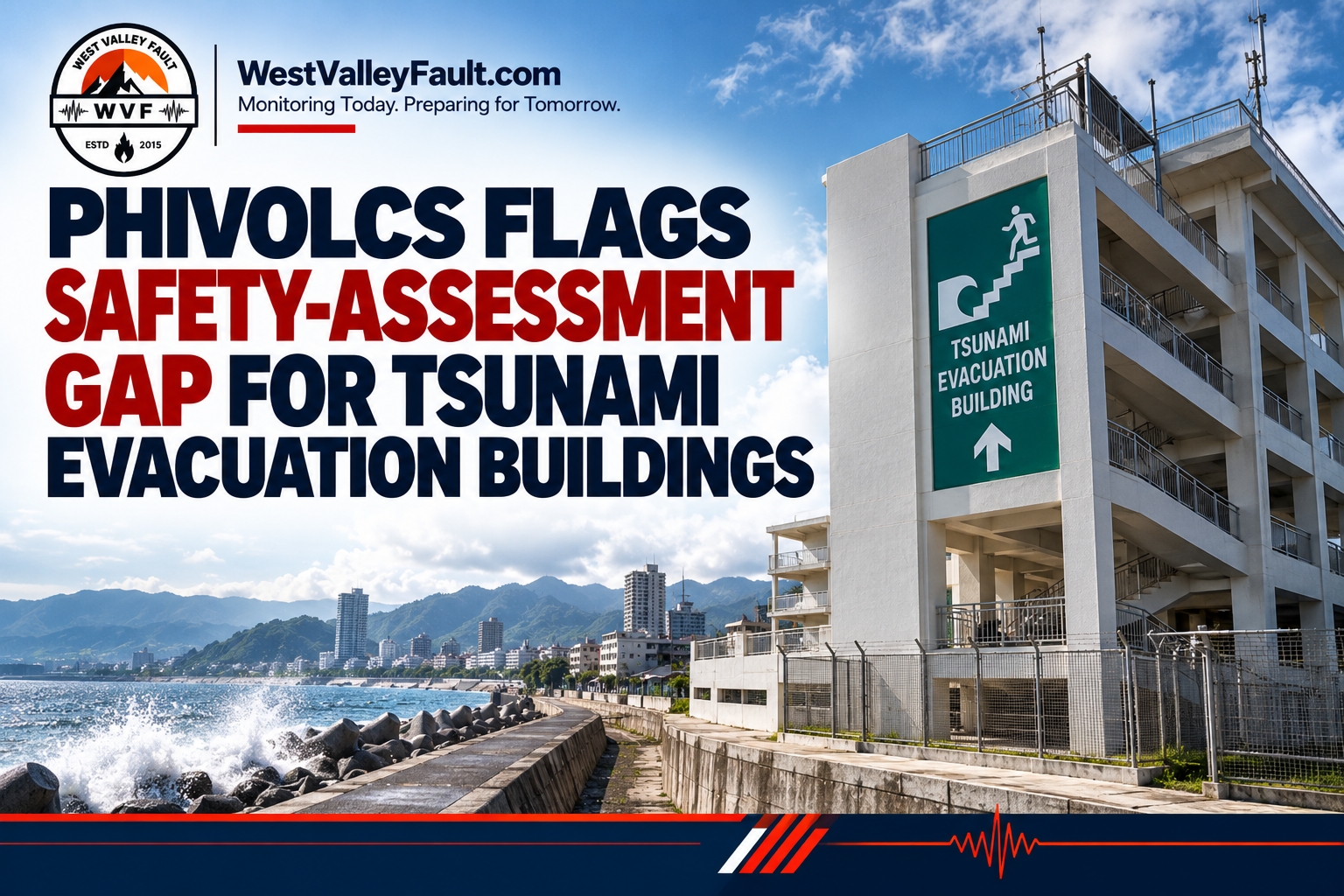
QUEZON CITY — The Philippine Institute of Volcanology and Seismology (PHIVOLCS) said the country does not yet have a specific standard for tsunami evacuation buildings, underscoring the need to assess the structural safety of buildings being considered for vertical evacuation.
The issue was raised during an October 13, 2026 earthquake-and-tsunami preparedness forum, according to a Philippine Information Agency report published the same day. PHIVOLCS said potential evacuation buildings need engineering evaluations of their earthquake resistance, local ground conditions and possible tsunami-wave impacts before they are used for that purpose.
A potential evacuation site is not automatically a safe shelter
Vertical evacuation may be considered where people cannot reach naturally elevated ground quickly enough. But an existing multi-storey building should not be assumed suitable simply because it is tall or close to the coast. The PHIVOLCS remarks highlight an unresolved safety-assessment requirement rather than the approval of any specific building for tsunami evacuation.
The report does not identify a newly approved national building standard, a list of certified vertical-evacuation structures or a timetable for introducing such a standard.

Immediate evacuation remains the public-safety priority
At the same forum, PHIVOLCS Deputy Director Ma. Mylene Martinez-Villegas urged coastal residents who experience strong or prolonged earthquake shaking to move away from shorelines and toward safer, higher ground without waiting for an official tsunami warning. Sudden sea withdrawal or unusual ocean sounds are other natural warning signs.
Officials discussed modeled tsunami scenarios, but the figures represent hypothetical hazard conditions, not predictions of when a future earthquake or tsunami will occur.
Why this matters for coastal preparedness
Coastal LGUs need evacuation routes and locations that account for both earthquake damage and tsunami effects. The safety of proposed vertical evacuation buildings is therefore an engineering and local planning question, not simply a matter of identifying tall structures.
For additional context, WVF has covered PHIVOLCS tsunami-awareness efforts in Metro Manila and the importance of building safety in earthquake risk. Readers can also explore PHIVOLCS hazard-checking resources for broader location-based risk awareness.
Stay Informed. Stay Prepared.
Get continuing earthquake intelligence, preparedness updates, Special Reports, and the WestValleyFault.com Weekly Earthquake & Preparedness Intelligence Report delivered to your inbox.

As a welcome gift, you’ll also receive the FREE WVF Earthquake Preparedness Quick Start Guide with practical first steps every household can take before a major earthquake.
Enter your email below to join the WVF email list. Unsubscribe anytime.
Recommended Further Reading
- PHIVOLCS Metro Manila Tsunami-Awareness Campaign
- The Big One Is Not the Biggest Threat—Our Buildings Are
- How Close Is Your Home to the West Valley Fault?




Leave a Reply