
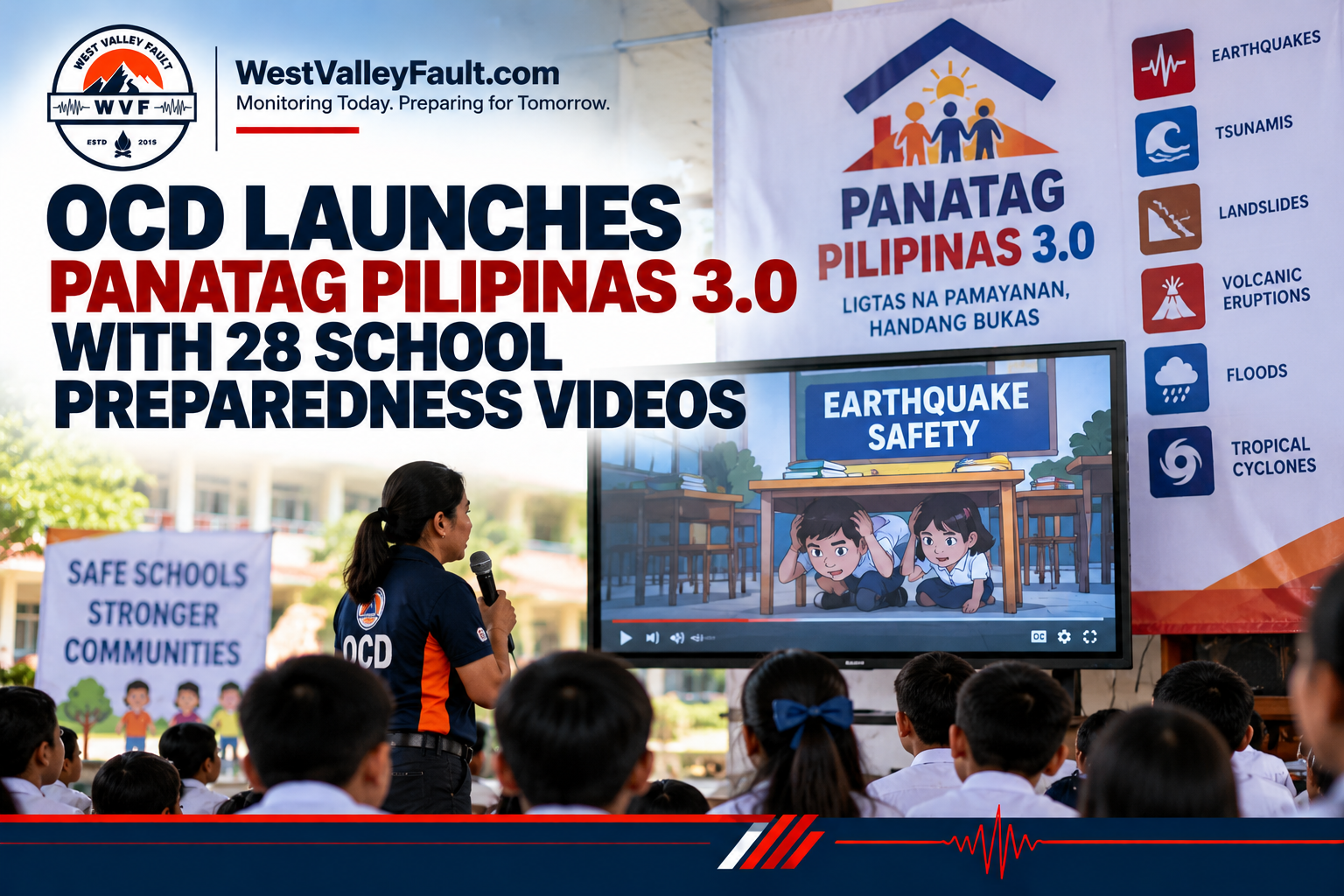
PASIG CITY — The Office of Civil Defense (OCD) launched Panatag Pilipinas 3.0 at Rizal High School on October 13, 2026, bringing a 28-video disaster-preparedness series to schools as part of an effort to encourage students to share safety lessons with their families.
The campaign covers earthquakes, tsunamis, landslides, volcanic eruptions, floods and tropical cyclones. The World Bank supports the OCD-led initiative, with the Department of Education (DepEd) and Presidential Communications Office (PCO) involved in the school-centered launch, according to an October 14 Philippine Information Agency report and a PCO release. The government described the series as 28 one-minute videos.
From school launch to local preparedness activity
The national unveiling coincided with the International Day for Disaster Risk Reduction, under the global theme Resilience Starts at Home and the Philippine theme Panatag na Tahanan at Paaralan. OCD Administrator Undersecretary Harold Cabreros said the school focus is intended to let preparedness knowledge move between classrooms and households.
A local activity took place the same day at Lo-ok National High School in Lapu-Lapu City, where the OCD and Lapu-Lapu City Disaster Risk Reduction and Management Office held a preparedness information campaign. The PIA Central Visayas report also discussed the new Panatag Pilipinas videos as part of the broader school preparedness effort. This documents a local outreach activity alongside the national launch; it does not establish that all 28 videos were screened or distributed at that school.
Twenty-eight lessons intended for wider distribution
Officials said the video series and supporting learning materials are intended for schools nationwide. The PCO also said government broadcasters and other media outlets would air the OCD–World Bank–DOST disaster preparedness videos. The available announcements do not provide a confirmed nationwide school-delivery count, viewership figures or evidence of measured learning outcomes.
The video subjects span several hazards affecting the Philippines, including earthquake and tsunami preparedness. Officials stressed that school lessons should translate into practical actions such as family emergency plans, school preparedness protocols and accessible emergency supplies—not simply video viewing.
Why the school-centered approach matters
Schools can help make protective behaviors familiar to students, who may then discuss evacuation routes, emergency supplies and household response plans with parents or guardians. The October 13 launch and Lapu-Lapu activity are implementation steps in education and outreach, but are not equivalent to verified improvements in every school’s disaster readiness.
WVF has previously covered the earlier Panatag Pilipinas 2.0 campaign, specific school retrofits and hospital evacuation work in Metro Manila, and hazard awareness around school locations. Those reports provide context for the difference between educational outreach, structural work and operational drills.
Stay Informed. Stay Prepared.
Get continuing earthquake intelligence, preparedness updates, Special Reports, and the WestValleyFault.com Weekly Earthquake & Preparedness Intelligence Report delivered to your inbox.

As a welcome gift, you’ll also receive the FREE WVF Earthquake Preparedness Quick Start Guide with practical first steps every household can take before a major earthquake.
Enter your email below to join the WVF email list. Unsubscribe anytime.
Recommended Further Reading
- What Hazards Surround Your Child’s School?
- OCD Launches Panatag Pilipinas 2.0 to Boost National Disaster Preparedness
- Metro Manila Reports Tsunami Plans, School Retrofits and Hospital Evacuation Drill
Sources
- Philippine Information Agency — Panatag Pilipinas 3.0 national school launch (October 14, 2026)
- Philippine Information Agency — Central Visayas school preparedness activity (October 14, 2026)
- Presidential Communications Office — International Day for Disaster Risk Reduction (October 13, 2026)




Leave a Reply