
Quick Facts
| Parameter | Details |
|---|---|
| Earthquake Information Number | No. 2 |
| Magnitude | 5.4 |
| Date & Time | 7 Aug 2026 – 10:38:02 AM |
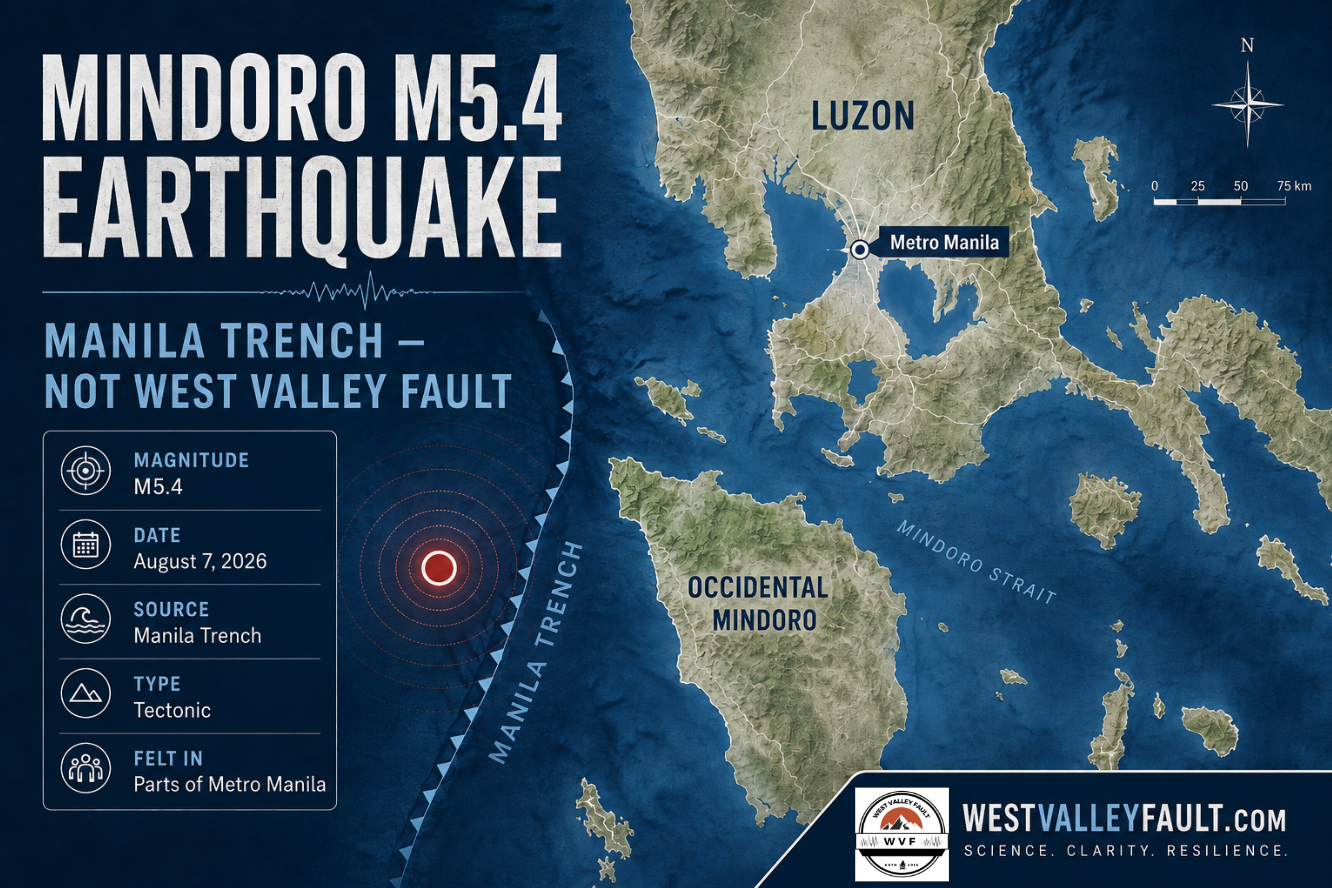
| Epicenter | 13 kilometers SW of Mamburao (Occidental Mindoro) |
| Depth | 14 kilometers |
| Origin | Tectonic |
| Reported Intensities | I, II, III, IV, V |
| Expected Damage | None |
| Expected Aftershocks | Yes |
| Tsunami Threat | None indicated by PHIVOLCS |
| Bulletin Issue Date | 07 August 2026 – 11:18 AM |
What Happened?
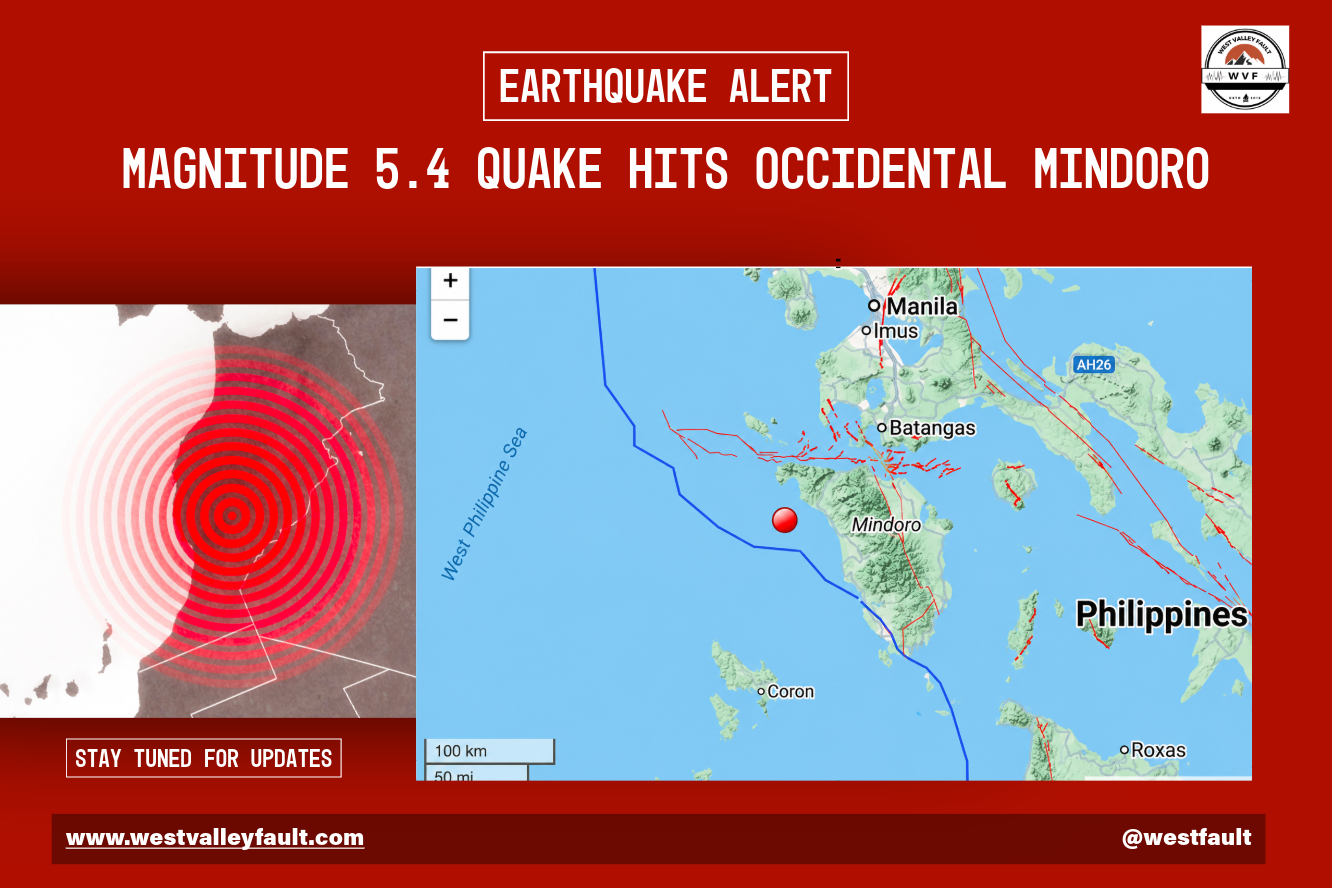
A magnitude 5.4 tectonic earthquake struck Occidental Mindoro at 10:38 a.m. today, Aug 7, according to the Philippine Institute of Volcanology and Seismology (PHIVOLCS). The earthquake occurred at a depth of 14 kilometers, with its epicenter located 13 kilometers southwest of Mamburao in the Province of Occidental Mindoro.
This is based on Phivolc’s first bulletin and as has been mostly the case, the magnitude could change.
Based on the agency’s initial assessment, there were no damage, but aftershocks are to be expected.
At the time of publication, no official reports of casualties or significant structural damage had been released.
Earthquake Details
| Parameter | Value |
|---|---|
| Magnitude | 5.4 |
| Origin | Tectonic |
| Depth | 14 km |
| Epicenter | 13 km SW of Mamburao (Occidental Mindoro) |
| Coordinates | 13.16°N, 120.50°E |
| Reported Intensities | I, II, III, IV, V |
The below intensities were reported in the following area:
Intensity II – CITY OF PARAÑAQUE; Santa Cruz, LAGUNA; Guinayangan, QUEZON
Intensity III – QUEZON CITY; Batangas City, BATANGAS; City of General Trias, CAVITE;
City of San Pedro, LAGUNA
Intensity IV – Taal, BATANGAS; Abra De Ilog, and Sablayan, OCCIDENTAL MINDORO
Intensity V – Mamburao, OCCIDENTAL MINDORO; City of Calapan, Naujan, Puerto Galera, San Teodoro,
and Victoria, ORIENTAL MINDORO

AI-Assisted Content Disclosure:
The information below was generated with the assistance of artificial intelligence and is provided for general informational and educational purposes only. While every effort has been made to ensure accuracy and clarity, AI-generated content may contain errors, omissions, or interpretations that do not reflect the latest scientific findings or official guidance.
This content should not be considered a definitive or authoritative source for earthquake-related information. Readers are encouraged to verify important details with official agencies such as PHIVOLCS, the Office of Civil Defense (OCD), and other relevant government or scientific institutions before making decisions or taking action.
Always rely on official advisories during emergencies and disaster situations.
What Does Magnitude 5.4 Mean?
A magnitude 5.4 earthquake is classified as a moderate earthquake. It can produce moderate to strong ground shaking, particularly near the epicenter, and may be felt across a wide area depending on its depth and location.
Earthquakes of this size do not usually cause widespread destruction, but light to moderate damage is possible, particularly in older, poorly constructed, or already weakened buildings. Near the epicenter, unsecured objects may fall, masonry and walls may crack, and some vulnerable structures may sustain localized damage. Well-engineered buildings generally perform much better, although non-structural damage can still occur.
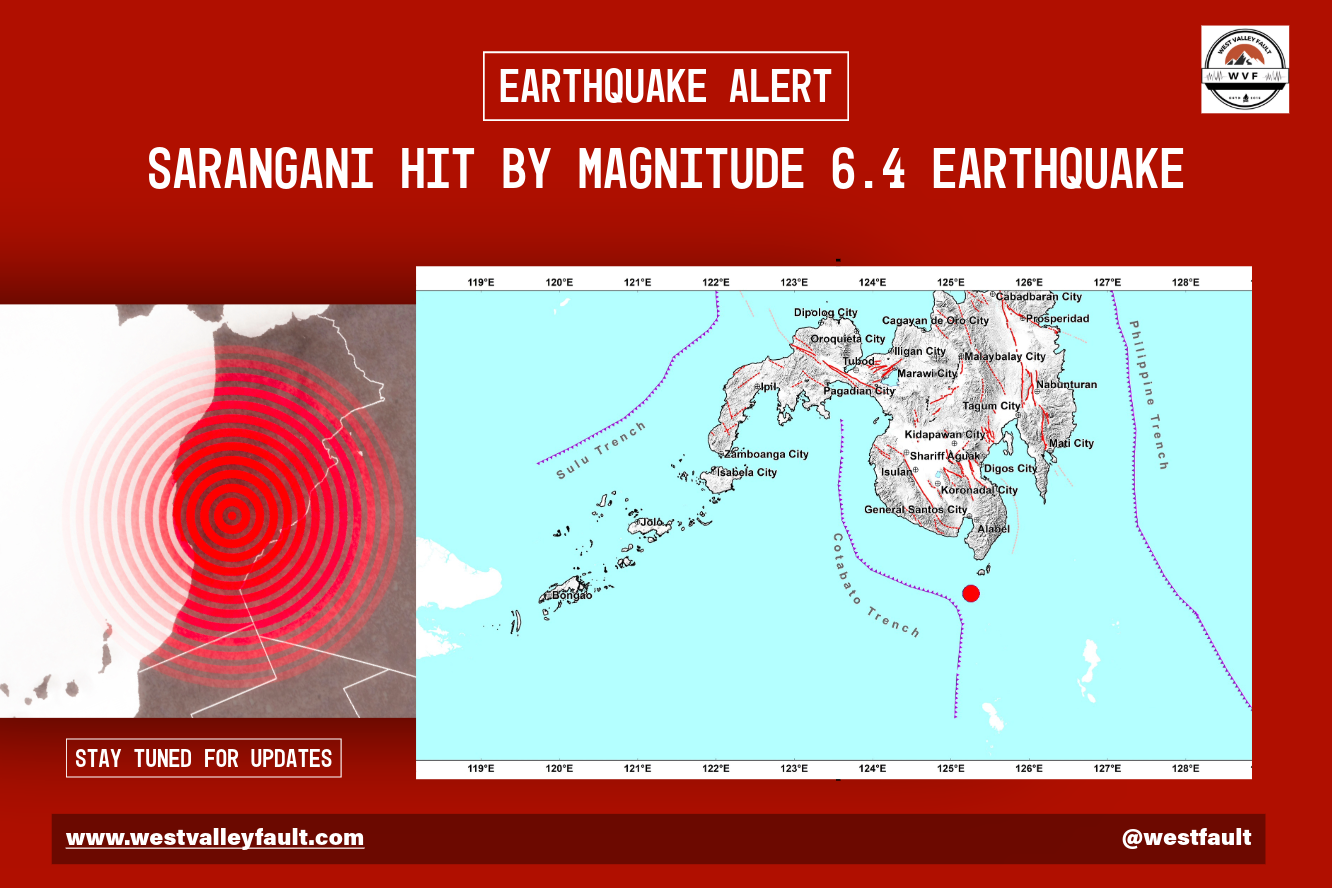
The difference between a magnitude 5.4 and a magnitude 5.0 earthquake is greater than the numbers might suggest. Because earthquake magnitude is measured on a logarithmic scale, a magnitude 5.4 earthquake releases about four times more energy than a magnitude 5.0 earthquake. A magnitude 6.4 earthquake, by comparison, releases approximately 32 times more energy than a magnitude 5.4 event.
The actual effects of a magnitude 5.4 earthquake depend on more than magnitude alone. Depth, distance from populated areas, local soil and geological conditions, and the vulnerability of buildings and infrastructure all influence how strongly the earthquake is experienced and how much damage it may cause. A shallow magnitude 5.4 earthquake close to a populated community can therefore be more consequential than a larger but deeper or more distant event.
Magnitude 5 earthquakes occur regularly in the Philippines because of the country’s active tectonic setting. While a magnitude 5.4 earthquake would not normally be expected to cause widespread serious damage, it remains a significant seismic event—particularly when shallow or close to populated communities—and should be treated as a reminder to remain prepared for earthquakes and possible aftershocks.
Why Did This Earthquake Happen?
The Philippines lies within the Pacific Ring of Fire, one of the world’s most active seismic belts. Earthquakes occur frequently as tectonic plates slowly move and interact beneath the Philippine archipelago.
This is a natural geological process and is not related to volcanic activity.
Is There a Tsunami Threat?
Based on the initial PHIVOLCS bulletin, no tsunami warning or advisory was issued for this earthquake.
Most inland earthquakes and many moderate offshore earthquakes do not generate tsunamis. Tsunami warnings are issued only when an earthquake has the characteristics capable of significantly disturbing the seafloor and producing hazardous sea waves.
Residents should always rely on official advisories from PHIVOLCS if an earthquake occurs near the coast.
Could Aftershocks Occur?
If PHIVOLCS indicates aftershocks are expected, residents should anticipate additional earthquakes in the coming hours or days. Aftershocks are a normal part of the earthquake cycle as the Earth’s crust adjusts following the main event.
Most aftershocks are smaller than the main earthquake, although some may still be strong enough to be felt.
Could This Trigger Other Earthquakes?
There is no evidence that this earthquake will trigger a major earthquake elsewhere in the country.
Moderate earthquakes can redistribute stress on nearby faults, but scientists cannot predict whether another earthquake will occur or exactly where it might happen. Each earthquake should be evaluated independently unless geological evidence later establishes a connection.
Key Takeaway
This earthquake serves as another reminder that the Philippines is one of the most seismically active countries in the world. While earthquakes cannot be predicted or prevented, their impacts can be greatly reduced through preparedness, resilient construction, and public awareness.
Residents are encouraged to monitor official updates from PHIVOLCS and local authorities as more information becomes available.
Safety Advice
If you felt the earthquake:
- Be prepared for possible aftershocks.
- Stay away from visibly damaged buildings and structures.
- Check your home for hazards such as gas leaks or damaged electrical wiring.
- Monitor only official information from PHIVOLCS and local disaster authorities.
- Avoid sharing unverified information on social media.
- Remember to Drop, Cover, and Hold On if another strong earthquake occurs.
Don’t Just Read About Earthquakes—Prepare for Them.

Join the WestValleyFault.com community to receive evidence-based earthquake intelligence, practical preparedness guidance, and exclusive Special Reports.
As a welcome gift, you’ll also receive our FREE Earthquake Quick Start Guide.
References
- PHIVOLCS Earthquake Information Bulletin
- DOST-PHIVOLCS Earthquake Monitoring Service









Leave a Reply