
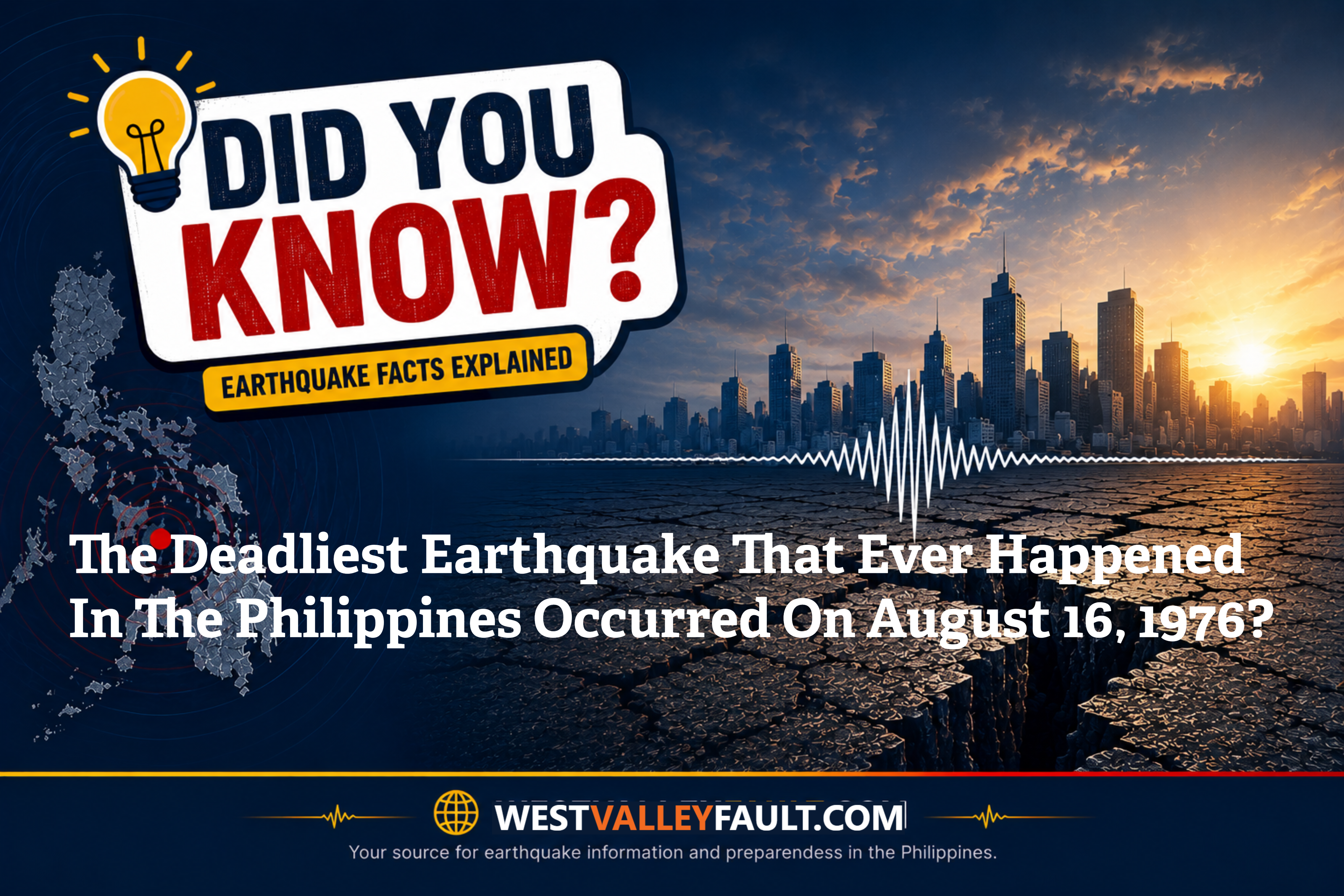
“Did You Know? #001— Earthquake Facts Explained
The Deadliest Earthquake in Philippine History Triggered a Devastating Tsunami
Did you know that the deadliest earthquake ever recorded in the Philippines struck on August 16, 1976?
The earthquake measured magnitude 7.9 and occurred beneath the seabed in the Moro Gulf. While the powerful shaking caused damage across parts of Mindanao, it was the massive tsunami that followed just minutes later that turned the disaster into one of the country’s darkest tragedies.


Source: Wikipedia
Towering waves, estimated to have reached up to 9 meters (30 feet) in some coastal areas, crashed into communities along the shores of the Moro Gulf. Many residents were asleep and had little or no warning before the water swept inland. Entire villages were destroyed, and thousands of families lost their homes.

Discover the most powerful earthquakes in Philippine history — from Bohol to Luzon — and how each reshaped lives, landmarks, and awareness.
The disaster claimed an estimated 5,000 to 8,000 lives, making it the deadliest earthquake in Philippine history. Thousands more were injured or reported missing, while around 90,000 people were left homeless. Coastal towns in what are now the provinces of Maguindanao del Norte, Maguindanao del Sur, Sultan Kudarat, and Lanao del Sur suffered some of the worst devastation.
The tragedy became a turning point in the country’s approach to tsunami preparedness. It highlighted the importance of earthquake and tsunami monitoring, coastal evacuation planning, and public education—lessons that continue to guide disaster risk reduction efforts today.
The 1976 Moro Gulf earthquake is a powerful reminder that after a strong offshore earthquake, the greatest danger may not be the shaking itself—but the sea that follows.
Quick Fact
📅 Date: August 16, 1976
📏 Magnitude: 7.9 Mw
📍 Epicenter: Moro Gulf, Mindanao
🌊 Major Hazard: Tsunami reaching up to about 9 meters
⚠️ Estimated Death Toll: 5,000–8,000 people
🏠 People Left Homeless: Around 90,000
Did You Know? is a continuing educational series by WestValleyFault.com, sharing quick, evidence-based facts about earthquakes, geology, and disaster preparedness in the Philippines.
Enjoyed this article?

Take the next step in your preparedness journey.
Download the FREE West Valley Fault™ Quick Start Guide and begin building your family’s emergency plan today.











Leave a Reply