
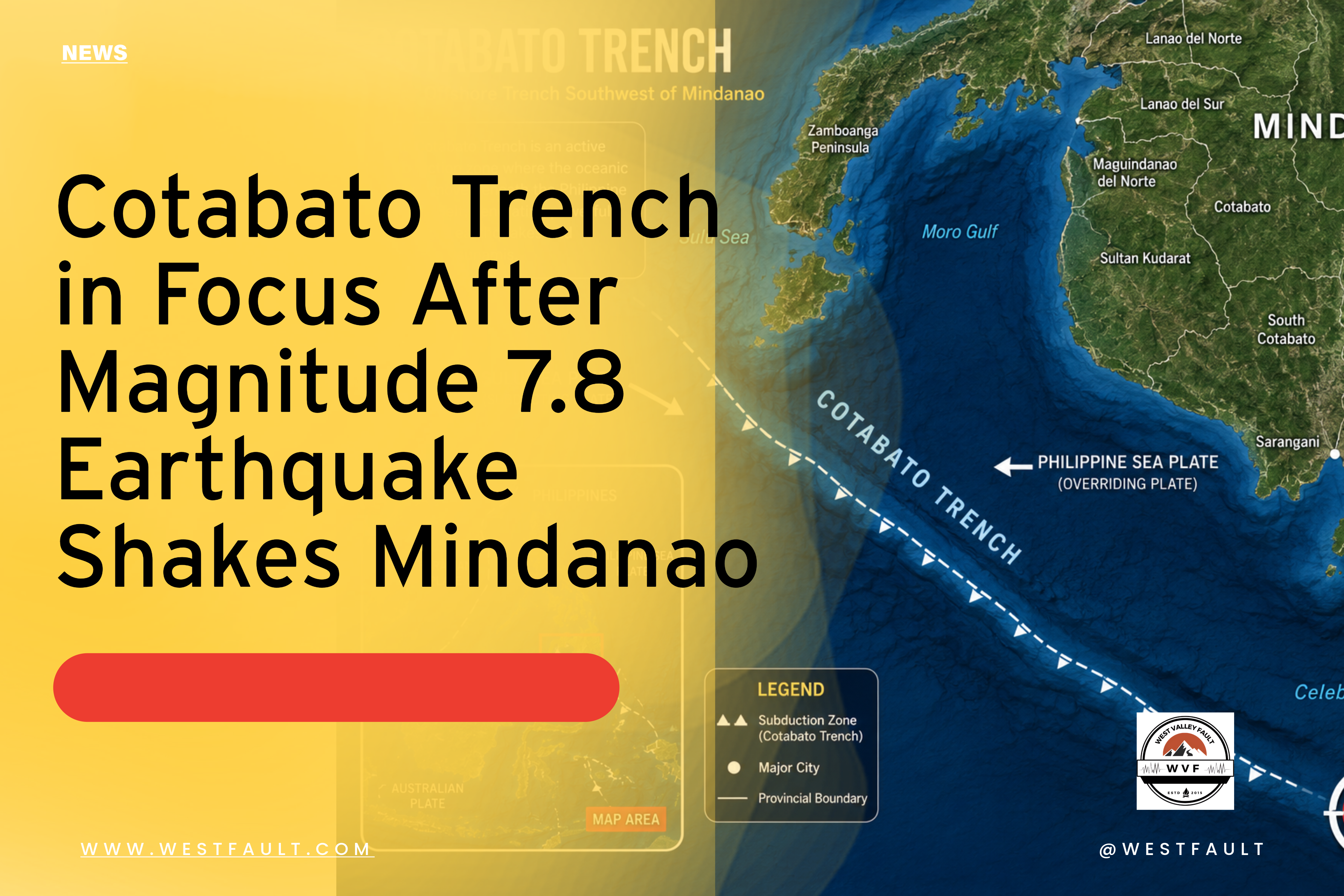
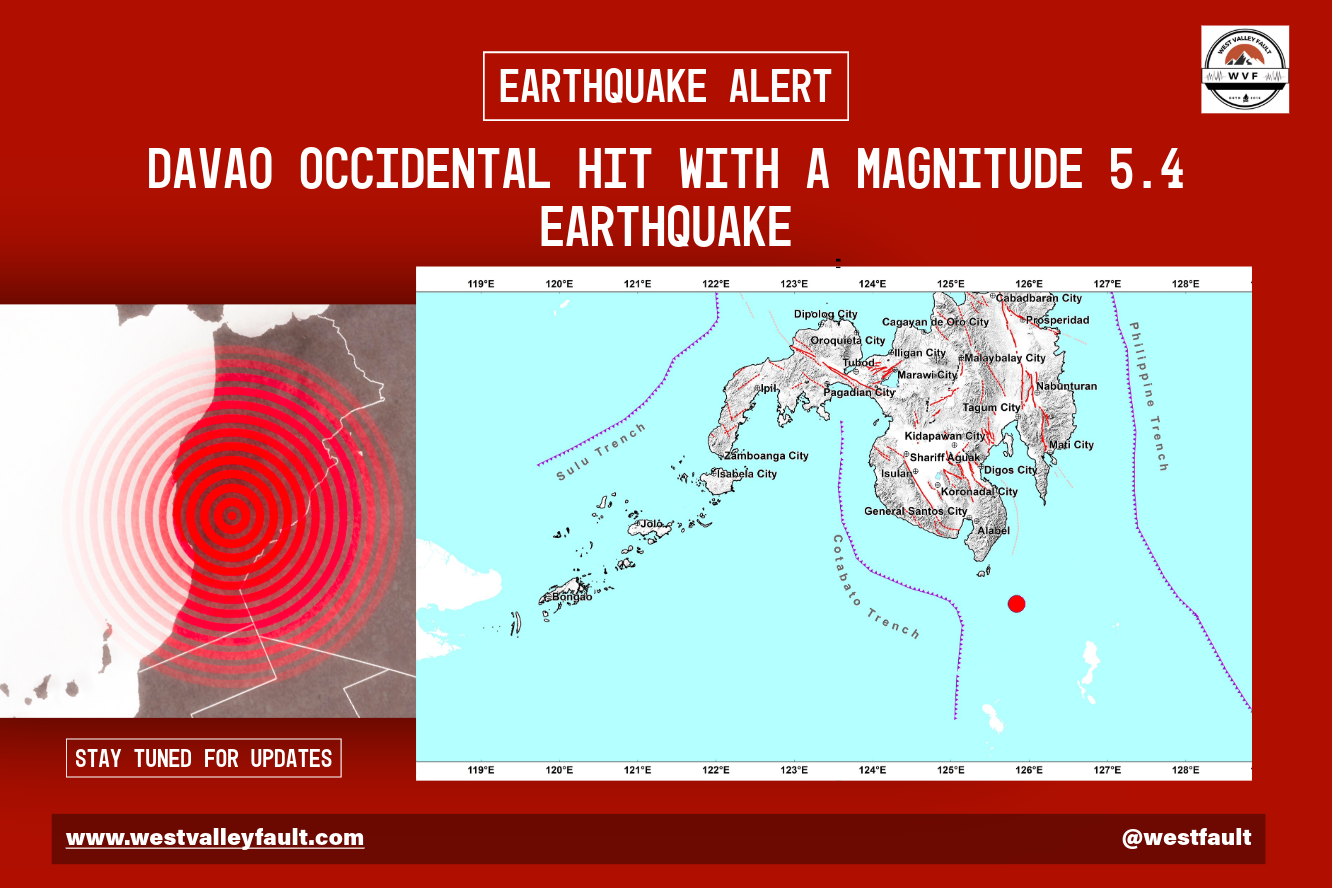
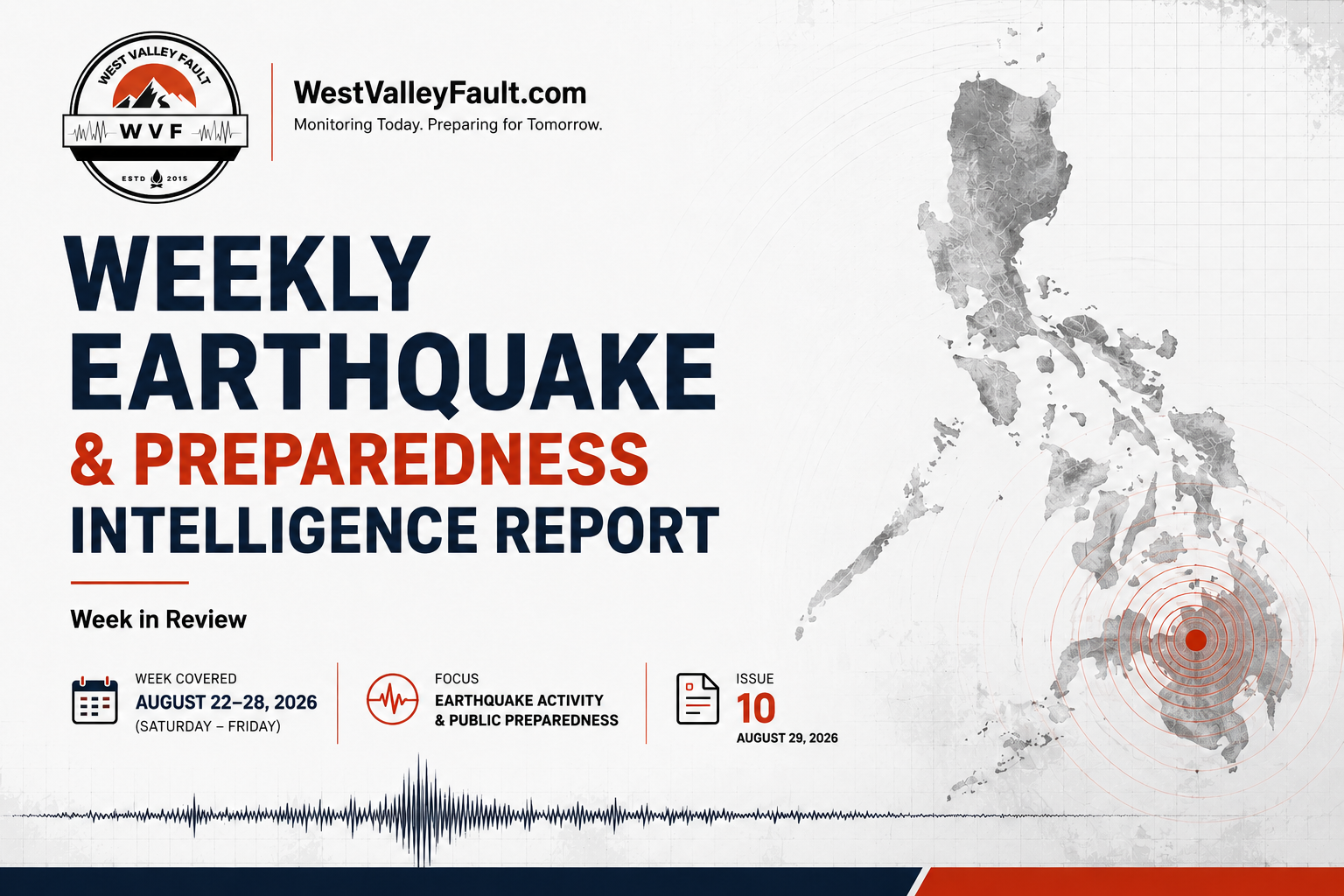
A powerful magnitude 7.8 earthquake that struck off the coast near General Santos City on Monday, June 8, has once again drawn attention to the Cotabato Trench, one of the Philippines’ most active offshore fault systems. Seismologists say the same underwater trench has been responsible for several major earthquakes that have impacted Mindanao over the past 50 years.
According to the Philippine Institute of Volcanology and Seismology (Phivolcs), the Cotabato Trench regularly produces small earthquakes, making it one of the country’s closely monitored seismic zones.
“Aktibo ‘yung Cotabato Trench. Marami tayong nare-record dito na mga earthquakes na maliliit,”
said Winchelle Sevilla, chief science research specialist at the Seismology Division of Phivolcs.
Why the Cotabato Trench Matters
Located southwest of Mindanao beneath the sea, the Cotabato Trench is where massive tectonic plates interact. These movements can generate strong undersea earthquakes capable of producing widespread ground shaking and, in some cases, tsunamis.
From January to May this year, Phivolcs also recorded earthquake swarms in parts of Sultan Kudarat that were associated with activity along the trench.
Unlike aftershocks, which occur after a major earthquake, earthquake swarms consist of numerous small to moderate earthquakes happening in the same area without a single dominant event.

Why Shaking Differs from Place to Place
Although Monday’s earthquake registered magnitude 7.8, the intensity experienced by residents varied significantly across Mindanao.
Magnitude measures the amount of energy released at the earthquake’s source, while intensity describes how strongly the shaking is felt in a particular location. Factors such as distance from the epicenter, earthquake depth, local soil conditions, and building construction all influence the level of shaking experienced.
A Trench with a Deadly Past
The Cotabato Trench is best remembered for generating the devastating Moro Gulf earthquake on August 17, 1976, one of the deadliest natural disasters in Philippine history.
The offshore earthquake triggered destructive tsunami waves that swept through coastal communities across Mindanao. Historical and government records estimate that at least 4,000 people lost their lives, around 3,000 were reported missing, and more than 9,000 were injured.
Among the hardest-hit areas were Pagadian City, Zamboanga City, Basilan, Sulu, Sultan Kudarat, Maguindanao, Cotabato City, Lanao del Sur, and Lanao del Norte.
The disaster remains a stark reminder of the tsunami risk associated with powerful offshore earthquakes in southern Philippines.

Discover the most powerful earthquakes in Philippine history — from Bohol to Luzon — and how each reshaped lives, landmarks, and awareness.
The 2002 Mindanao Earthquake
The Cotabato Trench was again identified as the source of another major earthquake on March 6, 2002.
The magnitude 7.5 event struck southwest of Sultan Kudarat and affected several provinces, including Sarangani, North Cotabato, South Cotabato, and Sultan Kudarat.
Disaster reports recorded eight fatalities and 41 injuries, while property damage reached approximately P4.175 million. More than 7,000 families were affected by the earthquake.

Casualties Continue to Rise
As emergency responders continue search and rescue operations following the June 8 earthquake, the Office of Civil Defense reported that at least 15 people had lost their lives as of 2 p.m. Monday after the powerful offshore earthquake near Sarangani province.
Authorities continue to assess damage to infrastructure and communities while reminding residents to remain alert for aftershocks and follow official advisories from disaster management agencies.
A Reminder for Earthquake Preparedness
The latest earthquake highlights the continuing seismic threat posed by the Cotabato Trench and the importance of earthquake preparedness across Mindanao and the rest of the Philippines.
Experts encourage families to prepare emergency kits, identify evacuation routes, and stay informed through official updates from Phivolcs and local authorities. While earthquakes cannot be predicted, preparedness remains the most effective way to reduce risks and save lives.
Preparation is key.

Take the next step in your preparedness journey.
Download the FREE West Valley Fault™ Quick Start Guide and begin building your family’s emergency plan today.
Recommended Further Reading
- Is Your Home Fault-Line Ready? A Structural Integrity Checklist for Metro Manila Homeowners
- How the Proximity to the West Valley Fault Affects Property Values in 2026
- Earthquake Preparedness for Businesses and Industries
- Ideas to Secure Your House Against Earthquakes: Simple Steps for Safety in the Philippines
- The Big One Philippines: What Experts Say About the Next Metro Manila Earthquake.
Source: PhilStarGlobal














Leave a Reply