
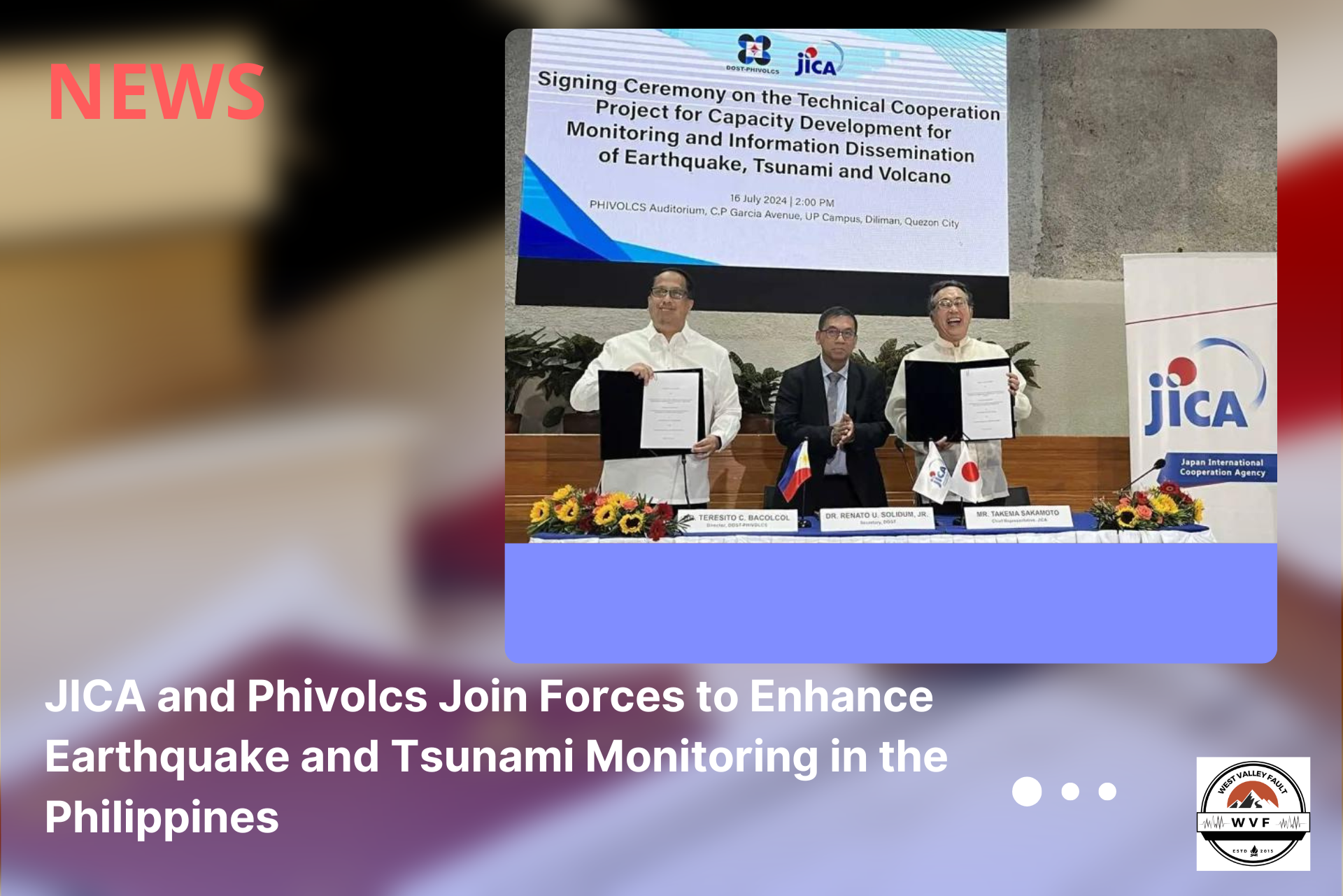
In a significant move to bolster earthquake and tsunami analysis and monitoring capabilities in the Philippines, the Japan International Cooperation Agency (JICA) has partnered with the Philippine Institute of Volcanology and Seismology (Phivolcs). The collaboration aims to enhance the technical skills of Phivolcs staff and improve the country’s disaster preparedness.

Scan the QR code to get this post on the go.
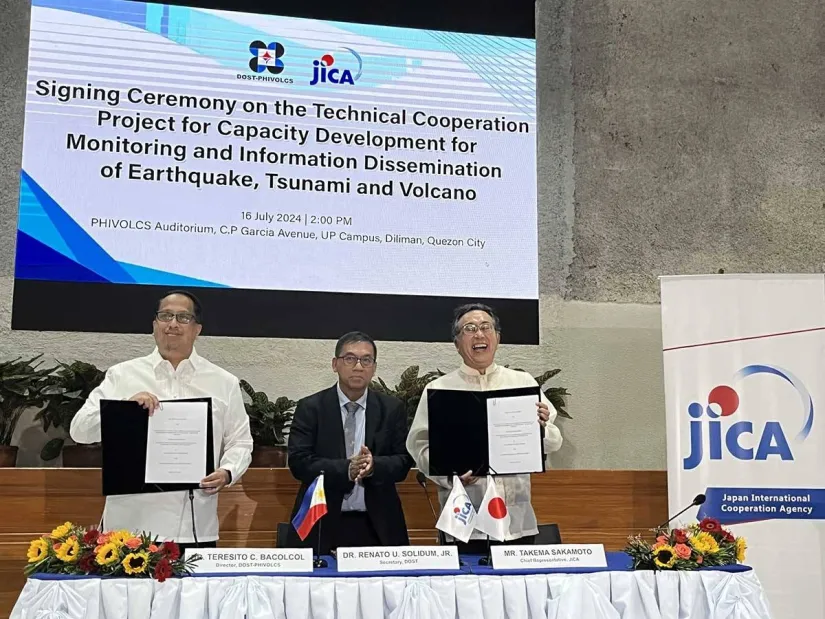
The official JICA announcement dated July 16, 2024 identifies this as the technical cooperation project “Capacity Development for Monitoring and Information Dissemination of Earthquake, Tsunami and Volcano.” The agreement set out capacity-building objectives; it should not be read as confirmation that all planned activities or system improvements have since been completed.
Technical cooperation signed in July 2024
The partnership was formalized through a record of discussions signed at the Phivolcs auditorium in Quezon City. Phivolcs Director Teresito Bacolcol highlighted that the initiative will empower their team to provide accurate and timely information regarding seismic activities and tsunamis. “This is Japan’s commitment and contribution to the promotion of international cooperation, especially towards developing countries,” Bacolcol said.
Training and development plans
A key component of the project involves sending Phivolcs employees to Japan for advanced training. Selected staff members will participate in short-term training programs, with two employees set to pursue graduate studies from 2025 to 2026, and another from 2026 to 2027. Additionally, Japanese experts will visit the Philippines to provide hands-on training in volcanology, seismology, and tsunami monitoring.

Improving warnings and risk communication
Department of Science and Technology (DOST) Secretary Renato Solidum Jr. emphasized the project’s focus on capacity development for information dissemination and standard operating procedures for seismic events. Experts from the Japan Meteorological Agency and partner universities will conduct specialized training sessions. “By focusing on data analysis, warning, and risk communication, we aim to develop a more robust earthquake monitoring and tsunami early warning system. This initiative will benefit vulnerable communities within the Philippines and extend its impact across the region,” Solidum stated.
Japan’s technical support
Solidum expressed gratitude to JICA, represented by Takema Sakamoto, for their invaluable support. “We recognize Japan’s unparalleled expertise and technological advancements in disaster mitigation and preparedness and are eager to incorporate these insights into our systems,” he said.
For context on why accurate hazard information matters to households, see WVF’s The Big One Philippines earthquake guide. To explore related Philippine earthquake-resilience initiatives, visit the Philippine Earthquake Resilience Projects Monitor. These are related resources, not evidence that the July 2024 JICA–PHIVOLCS project has finished.
What the partnership was intended to achieve
This collaboration between JICA and Phivolcs marks a crucial step towards enhancing the Philippines’ disaster resilience. By leveraging Japan’s advanced expertise, the project aims to create a more effective earthquake monitoring and tsunami warning system, ultimately safeguarding communities and saving lives.
For more updates on disaster preparedness and international cooperation, stay tuned to our blog.
Source: PNA, TheManilaTimes




Leave a Reply