
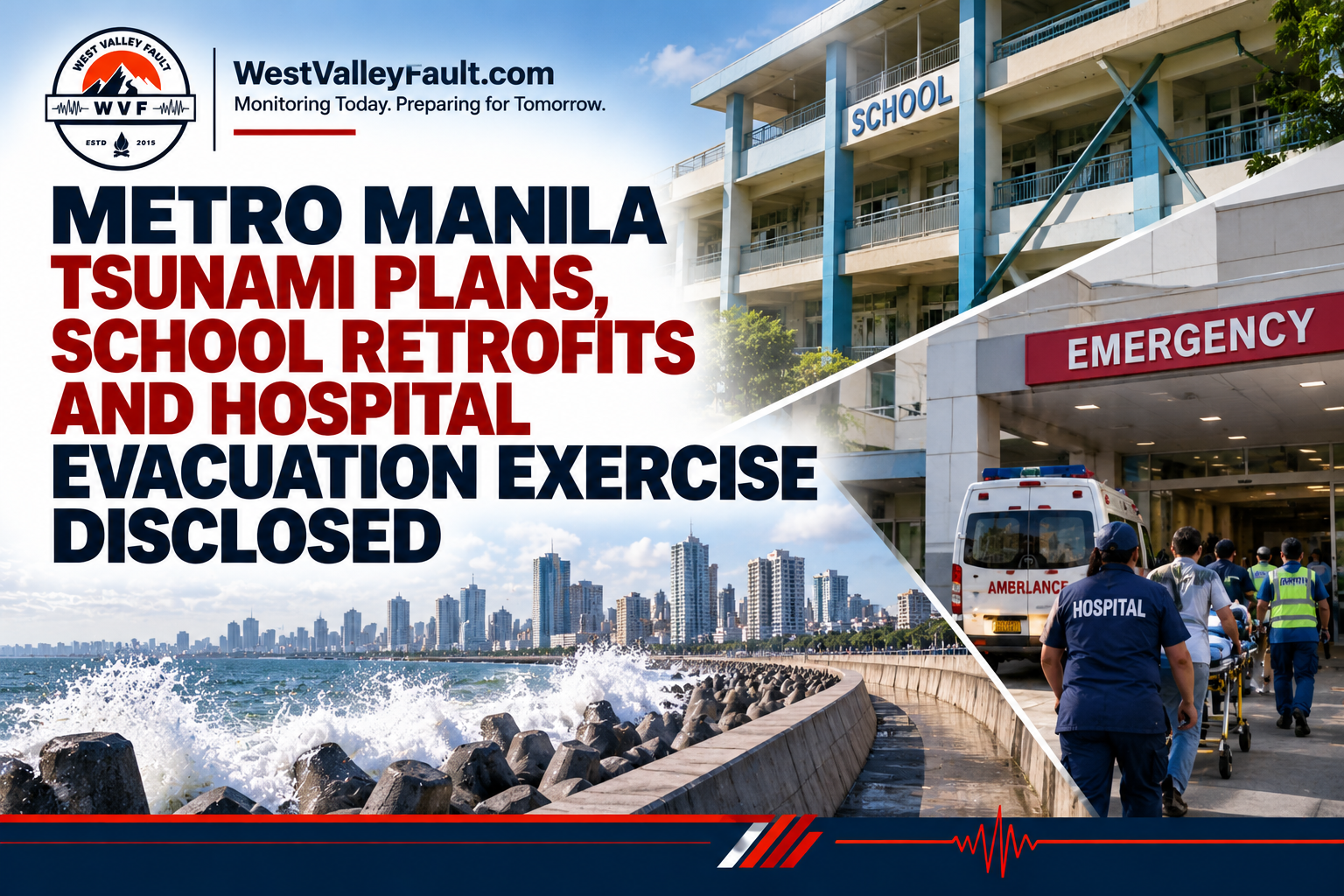
MANILA — Metro Manila officials have disclosed city-level tsunami contingency plans, school retrofits and a hospital evacuation exercise, highlighting preparedness work beyond the previously announced October 24 tsunami-awareness run. The details appeared in an October 14, 2026 Philippine Information Agency report about a government and private-sector briefing held Tuesday in Quezon City.
Las Piñas and Parañaque report local preparedness measures
Office of Civil Defense–National Capital Region Director George Keyser said Las Piñas has maintained a tsunami contingency plan since 2023 and Parañaque adopted a plan covering 2025–2027. He also reported that two public high schools in Las Piñas have been retrofitted.
At Ospital ng Parañaque 1, officials conducted a vertical-evacuation drill based on a simulated magnitude 7.8 earthquake and 20-foot tsunami. Those figures describe the exercise scenario, not an actual earthquake or a current tsunami forecast. The PIA account does not identify the two schools, their retrofit scopes or project costs, or the hospital drill’s performance findings.
National training and warning capabilities
PHIVOLCS Deputy Director Ma. Mylene Martinez-Villegas reported that 94 coastal barangays in six provinces have received training through the Tsunami-Ready Communities program since 2023. The agency also cited 29 sea-level monitoring stations supporting its tsunami-alerting arrangements, alongside community-based early-warning systems.
The National Tsunami Ready Board was established under NDRRMC Resolution No. 01, series of 2026, to support a national tsunami-resilience framework. Meanwhile, OCD-NCR said its high-intensity-earthquake and tsunami contingency plans are designed to operate together when an offshore earthquake creates a tsunami threat.
Why the developments matter
School retrofits, city contingency plans and hospital evacuation exercises show different types of preparedness activity: physical strengthening, policy-level planning and operational practice. They should not, however, be treated as proof that every relevant building is tsunami-safe or that evacuation performance has been independently validated. WVF separately reported PHIVOLCS’ warning about safety-assessment gaps for potential tsunami evacuation buildings.
The new disclosures also add substantive implementation context to WVF’s earlier report on the October 24 Metro Manila tsunami-awareness campaign. The PHIVOLCS seismic and tsunami monitoring procurement report covers a separate equipment-acquisition development.
For exposed coastal residents, PHIVOLCS continues to stress the natural tsunami warning signs: strong earthquake shaking, unusual sea-level changes or an unusual ocean roar. People should move away from the shoreline promptly when such signs occur rather than wait for an official warning.
Stay Informed. Stay Prepared.
Get continuing earthquake intelligence, preparedness updates, Special Reports, and the WestValleyFault.com Weekly Earthquake & Preparedness Intelligence Report delivered to your inbox.

As a welcome gift, you’ll also receive the FREE WVF Earthquake Preparedness Quick Start Guide with practical first steps every household can take before a major earthquake.
Enter your email below to join the WVF email list. Unsubscribe anytime.
Recommended Further Reading
- PHIVOLCS Flags Safety-Assessment Gap for Tsunami Evacuation Buildings
- PHIVOLCS, Partners Set October 24 Tsunami Awareness Campaign
- PHIVOLCS Seismic and Tsunami Monitoring Procurement Cluster




Leave a Reply