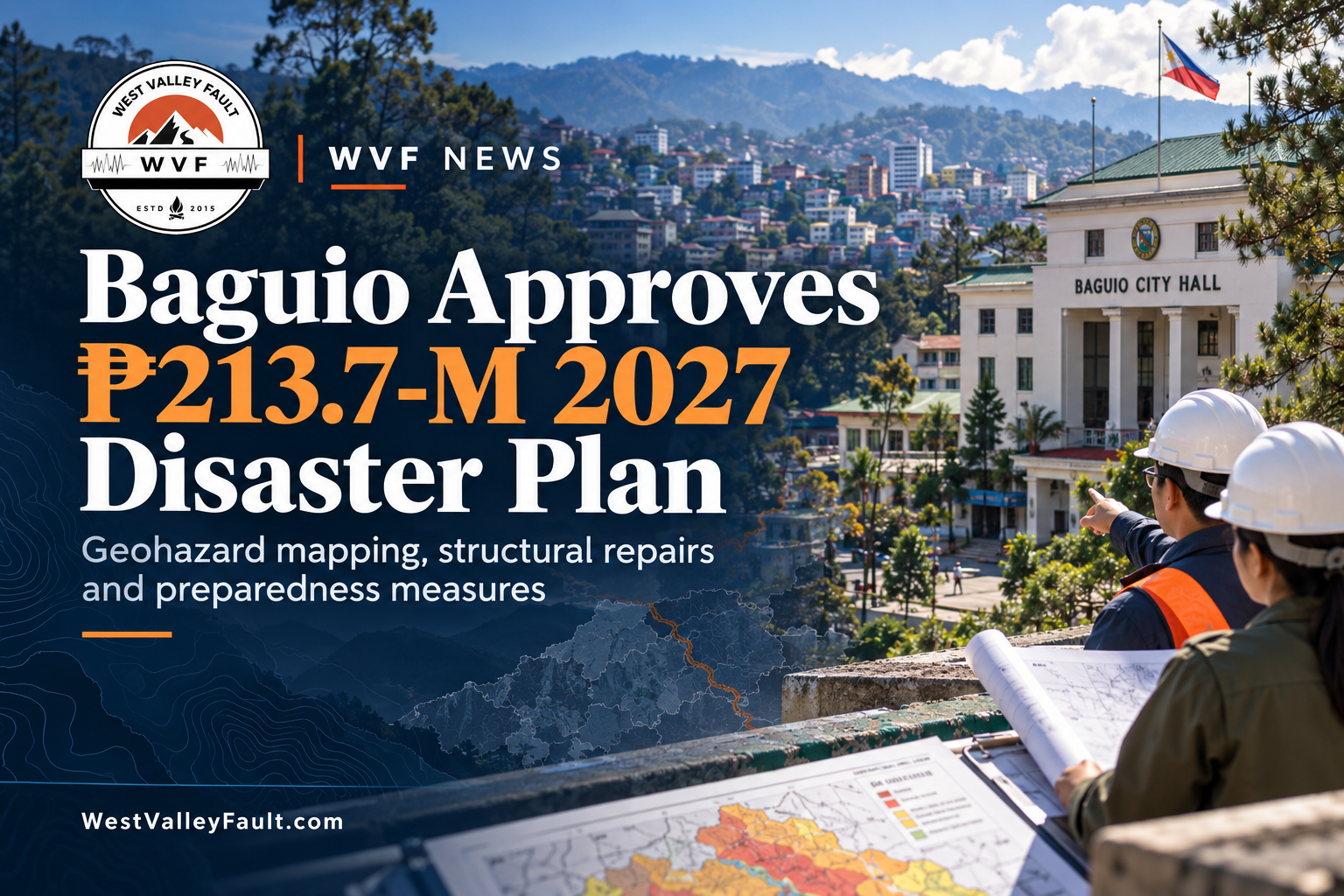
BAGUIO CITY — Baguio City has approved a ₱213.7-million disaster risk reduction and management investment plan for 2027, combining geohazard mapping, preparedness programs, structural repairs, evacuation measures and response capacity in a package with direct relevance to earthquake readiness.
The plan is formally multi-hazard, not a dedicated earthquake program. Several of its components, however, address capabilities that also matter in a major earthquake: identifying hazards, improving structural resilience, preparing schools and communities, communicating risk, supporting evacuation and sustaining emergency response.
According to the Philippine News Agency, the City Disaster Risk Reduction and Management Council approved the plan with ₱149.59 million for DRRM programs and ₱64.11 million for the Quick Response Fund.
What the 2027 plan funds
Under prevention and mitigation, Baguio programmed ₱30 million for integrated geohazard mapping. The wider allocation also includes monitoring, equipment and other measures intended to support risk reduction.
Another ₱30.59 million is earmarked for preparedness activities, including barangay Incident Command System training, family preparedness workshops, personal protective equipment for students and teachers, additional equipment for the Baguio City Fire Station, and a multi-hazard risk communication master plan.
The plan also includes disaster risk reduction and climate-change adaptation programs in public schools, child- and women-friendly evacuation spaces, emergency medical preparedness, hazardous-materials response capacity and other response measures.
For rehabilitation and recovery, ₱10.38 million is earmarked for work that includes eight structural-repair projects in priority areas such as Bued River, Sto. Tomas Central Slope, Middle Quirino Alley and Teachers’ Camp.

Why the earthquake relevance is more than incidental
Baguio and the wider Cordillera have also been strengthening infrastructure-audit capability specifically for earthquakes and other hazards. In July, the Department of the Interior and Local Government in the Cordillera said local infrastructure audit teams were being trained to evaluate whether critical facilities, hospitals, evacuation centers, schools and government buildings are structurally sound and able to remain operational during emergencies.
Baguio itself completed infrastructure-audit training focused on applying the audit tool in an urban setting and translating that training into local action plans. That work provides an important technical backdrop to the city’s new geohazard and structural-resilience spending.
The city has also tested operational earthquake readiness. During the first-quarter Nationwide Simultaneous Earthquake Drill in March, Baguio served as a regional pilot area for a full-scale exercise involving evacuation, crowd and traffic control, medical transport, emergency management and designated evacuation areas.
That does not make every peso in the 2027 plan earthquake-specific. It does show that the city’s broader multi-hazard program is being developed alongside concrete seismic-preparedness measures.
What to watch next
The key implementation questions are what the integrated geohazard mapping will cover, which risks the eight structural-repair projects are designed to reduce, how school-level DRR programs are carried out, and whether infrastructure-audit findings translate into specific strengthening or rehabilitation projects.
WVF has been tracking similar moves from assessment to implementation, including Pastrana, Leyte’s seismic evaluation of its municipal building, DPWH’s active seismic-retrofit procurement for public-school buildings in Manila and Taguig, and the need for schools to understand the hazards surrounding their campuses.
Stay Informed. Stay Prepared.
Get continuing earthquake intelligence, preparedness updates, Special Reports, and the WestValleyFault.com Weekly Earthquake & Preparedness Intelligence Report delivered to your inbox.
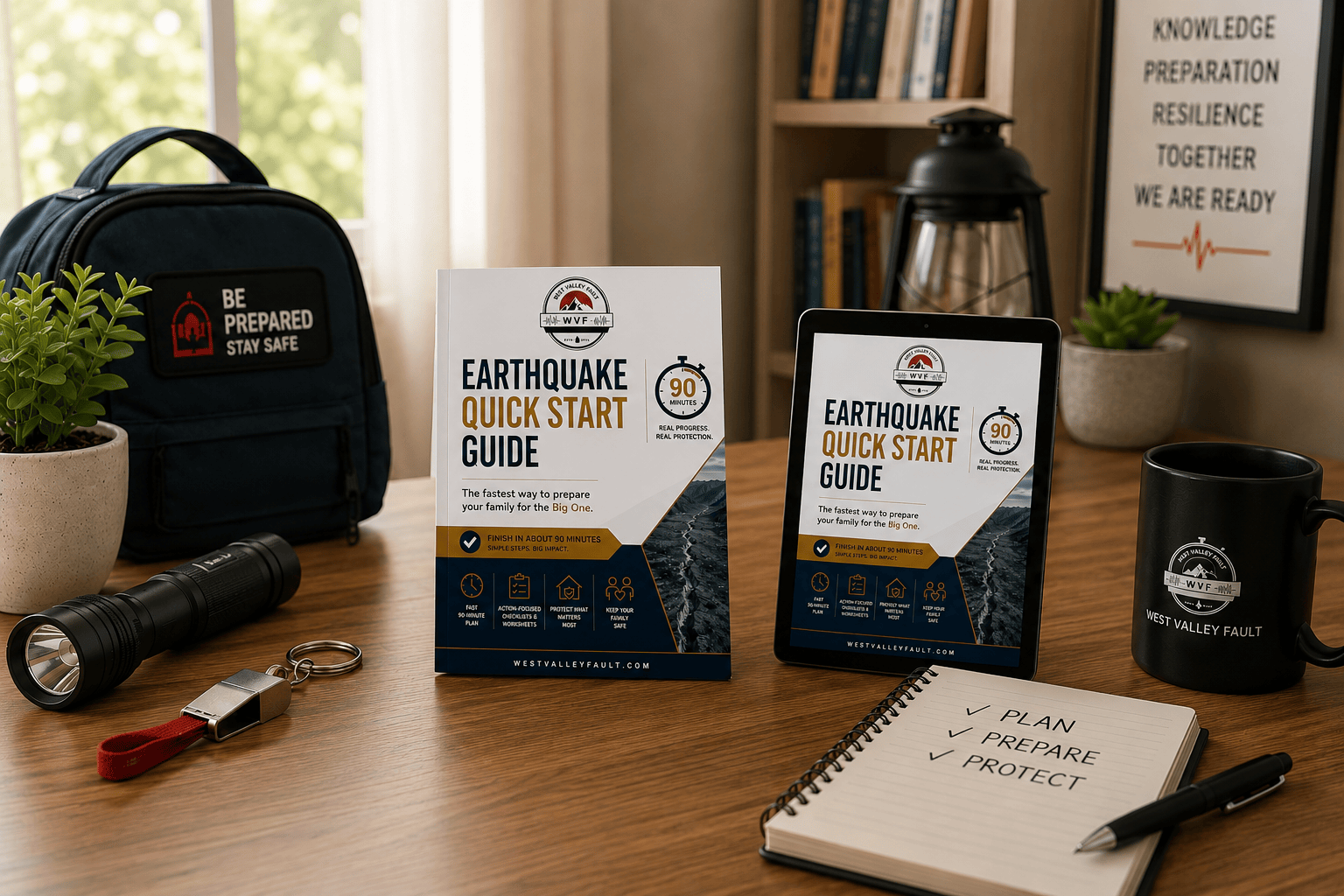
As a welcome gift, you’ll also receive the FREE WVF Earthquake Preparedness Quick Start Guide with practical first steps every household can take before a major earthquake.
Enter your email below to join the WVF email list. Unsubscribe anytime.
Recommended Further Reading
- Pastrana, Leyte Moves to Seismically Evaluate Its Municipal Building
- DPWH Opens ‘Big One’ Retrofitting Bids for 21 Public School Buildings in Manila and Taguig
- More Than 2,300 DPWH Engineers Trained in Seismic Retrofitting of Public Buildings
- What Hazards Surround Your Child’s School?
Sources
- Philippine News Agency — Baguio allots P213.7M for 2027 disaster resilience projects, September 28, 2026
- Philippine Information Agency — DILG-CAR intensifies infrastructure audit for public-building safety against earthquakes and other disasters, July 20, 2026
- DILG Cordillera — Baguio City infrastructure-audit action planning, July 27, 2026
- Philippine Information Agency — Baguio City tests earthquake preparedness and response readiness in NSED, March 16, 2026




Leave a Reply