
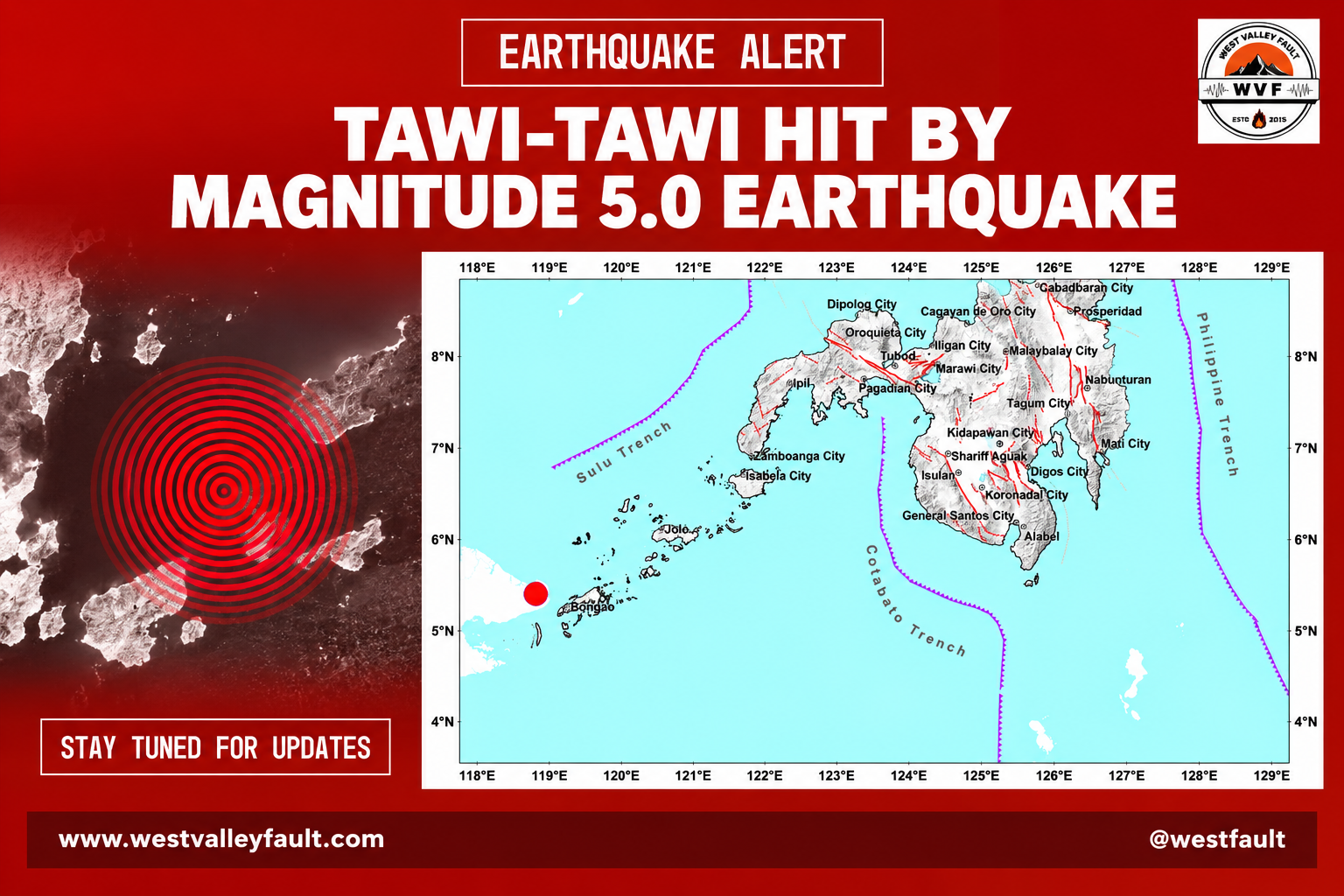
Quick Facts
| Parameter | Details |
|---|---|
| Earthquake Information Number | No. 2 |
| Magnitude | Mw 5.0 |
| Date & Time | 06 Oct 2026 – 09:11:28 PM |
| Epicenter | 070 km N 39° W of Sibutu, Tawi-Tawi |
| Depth | 5 km |
| Origin | Tectonic |
| Reported Intensities | None reported in PHIVOLCS Bulletin No. 2 |
| Expected Damage | No |
| Expected Aftershocks | No |
| Tsunami Threat | None indicated in PHIVOLCS Bulletin No. 2 |
| Bulletin Issue Date | 07 Oct 2026 – 07:14 AM |
What Happened?
A magnitude 5.0 tectonic earthquake struck offshore Tawi-Tawi at 9:11 p.m. on October 6, according to the Philippine Institute of Volcanology and Seismology (PHIVOLCS). The earthquake occurred at a depth of 5 kilometers, with its epicenter located 70 kilometers north 39 degrees west of Sibutu, Tawi-Tawi.
Based on the agency’s assessment, no damage and no aftershocks are expected.
At the time of publication, no official reports of casualties or significant structural damage had been released.
This report is based specifically on PHIVOLCS Earthquake Information No. 2, issued 7:14 AM on October 7, 2026. PHIVOLCS states that this will be the only bulletin unless additional information becomes available.

AI-Assisted Content Disclosure:
The information below was generated with the assistance of artificial intelligence and is provided for general informational and educational purposes only. While every effort has been made to ensure accuracy and clarity, AI-generated content may contain errors, omissions, or interpretations that do not reflect the latest scientific findings or official guidance.
This content should not be considered a definitive or authoritative source for earthquake-related information. Readers are encouraged to verify important details with official agencies such as PHIVOLCS, the Office of Civil Defense (OCD), and other relevant government or scientific institutions before making decisions or taking action.
Always rely on official advisories during emergencies and disaster situations.
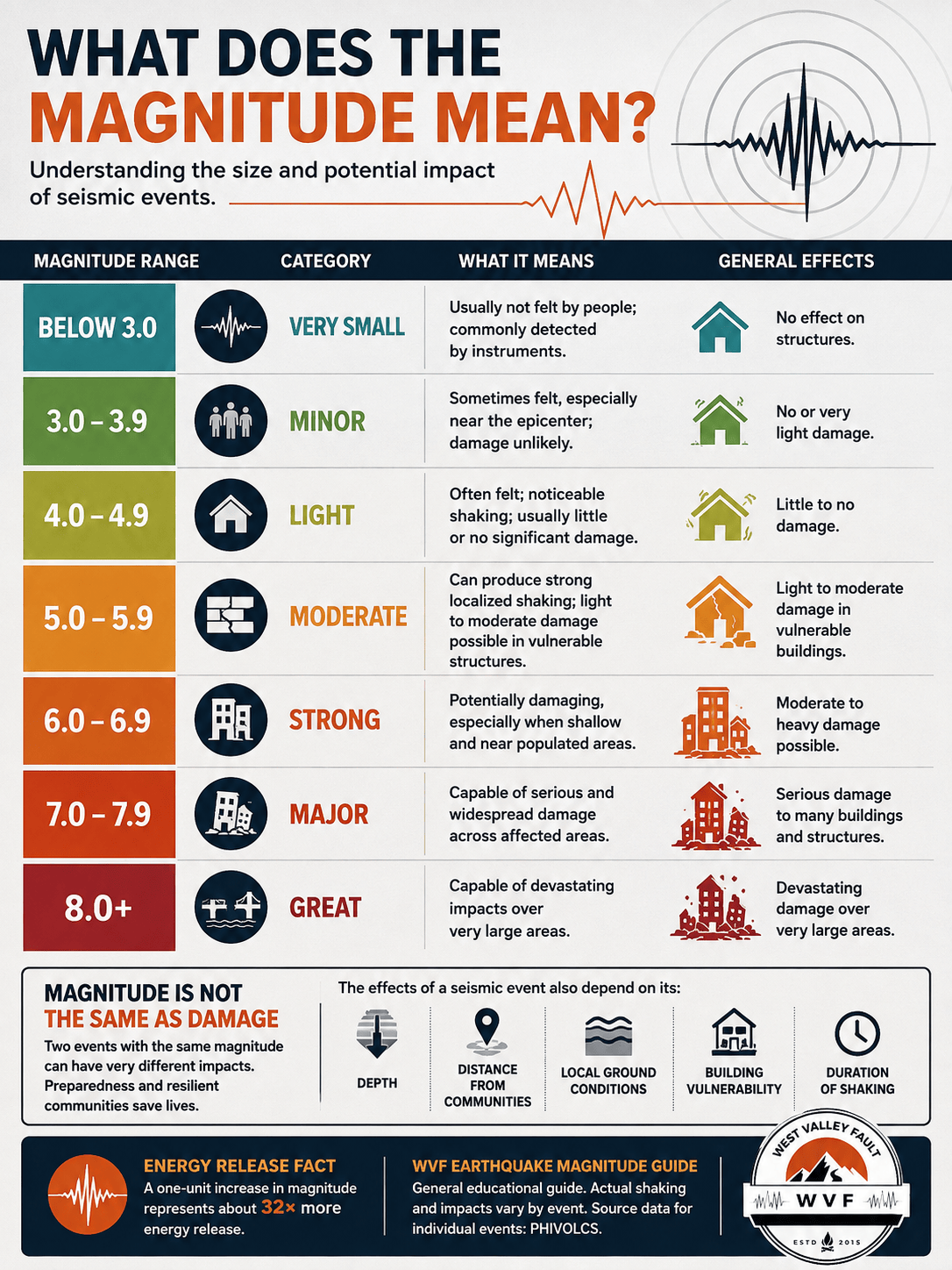
Why Did This Earthquake Happen?
The Philippines lies within the Pacific Ring of Fire, one of the world’s most active seismic belts. Earthquakes occur frequently as tectonic plates slowly move and interact beneath the Philippine archipelago.
This is a natural geological process and is not related to volcanic activity.
Is There a Tsunami Threat?
PHIVOLCS Earthquake Information No. 2 does not include a tsunami warning or advisory for this earthquake.
Most inland earthquakes and many moderate offshore earthquakes do not generate tsunamis. Tsunami warnings are issued only when an earthquake has the characteristics capable of significantly disturbing the seafloor and producing hazardous sea waves.
Residents should always rely on official advisories from PHIVOLCS if an earthquake occurs near the coast.
Could Aftershocks Occur?
PHIVOLCS does not expect aftershocks from this earthquake.
While smaller earthquakes can sometimes follow a seismic event, the agency’s current assessment for this particular event is “Expecting Aftershocks: NO.” Residents should continue to monitor PHIVOLCS in case additional information becomes available.
Could This Trigger Other Earthquakes?
There is no evidence that this earthquake will trigger a major earthquake elsewhere in the country.
Moderate earthquakes can redistribute stress locally, but scientists cannot predict whether another earthquake will occur or exactly where it might happen. Each earthquake should be evaluated independently unless geological evidence later establishes a connection.
Safety Advice
If you felt the earthquake:
- Remain alert and monitor PHIVOLCS for any subsequent earthquake bulletins.
- Stay away from visibly damaged buildings and structures.
- Check your home for hazards such as gas leaks or damaged electrical wiring.
- Monitor only official information from PHIVOLCS and local disaster authorities.
- Avoid sharing unverified information on social media.
- Remember to Drop, Cover, and Hold On if another strong earthquake occurs.
TAKE THE NEXT STEP
Don’t Just Read About Earthquakes—Prepare for Them.
Even when a specific earthquake is not expected to cause damage or aftershocks, it is a useful reminder to prepare before the next damaging event. Choose the next step that best fits your household.

Build Your Family’s Emergency Plan
Organize household contacts, meeting points, evacuation information, responsibilities, essential records and other preparedness steps before they are needed.
Still Building Your Emergency Supplies?
Use the WVF Emergency Preparedness Essentials guide to review practical categories including water, first aid, lighting and communications, go-bags, backup power, emergency food and other preparedness equipment.
START FREE
Not Ready for a Full Emergency Plan Yet?

Start with the FREE WVF Earthquake Preparedness Quick Start Guide.
Join the WVF email list to receive the guide as your welcome gift, plus continuing earthquake intelligence, preparedness updates and Special Reports.
References
- PHIVOLCS Earthquake Information No. 2 — 06 October 2026 Sibutu, Tawi-Tawi event
- DOST-PHIVOLCS Earthquake Monitoring Service




Leave a Reply