

Quick Facts
| Parameter | Details |
|---|---|
| Magnitude | 5.0 |
| Date & Time | 19 Jul 2026 – 04:19:44 PM |
| Epicenter | 40 kilometers SE of Balut Island (Davao Occidental) |
| Depth | 10 kilometers |
| Origin | Tectonic |
| Reported Intensities | |
| Expected Damage | None |
| Expected Aftershocks | Yes |
| Tsunami Threat | None indicated by PHIVOLCS |
What Happened?
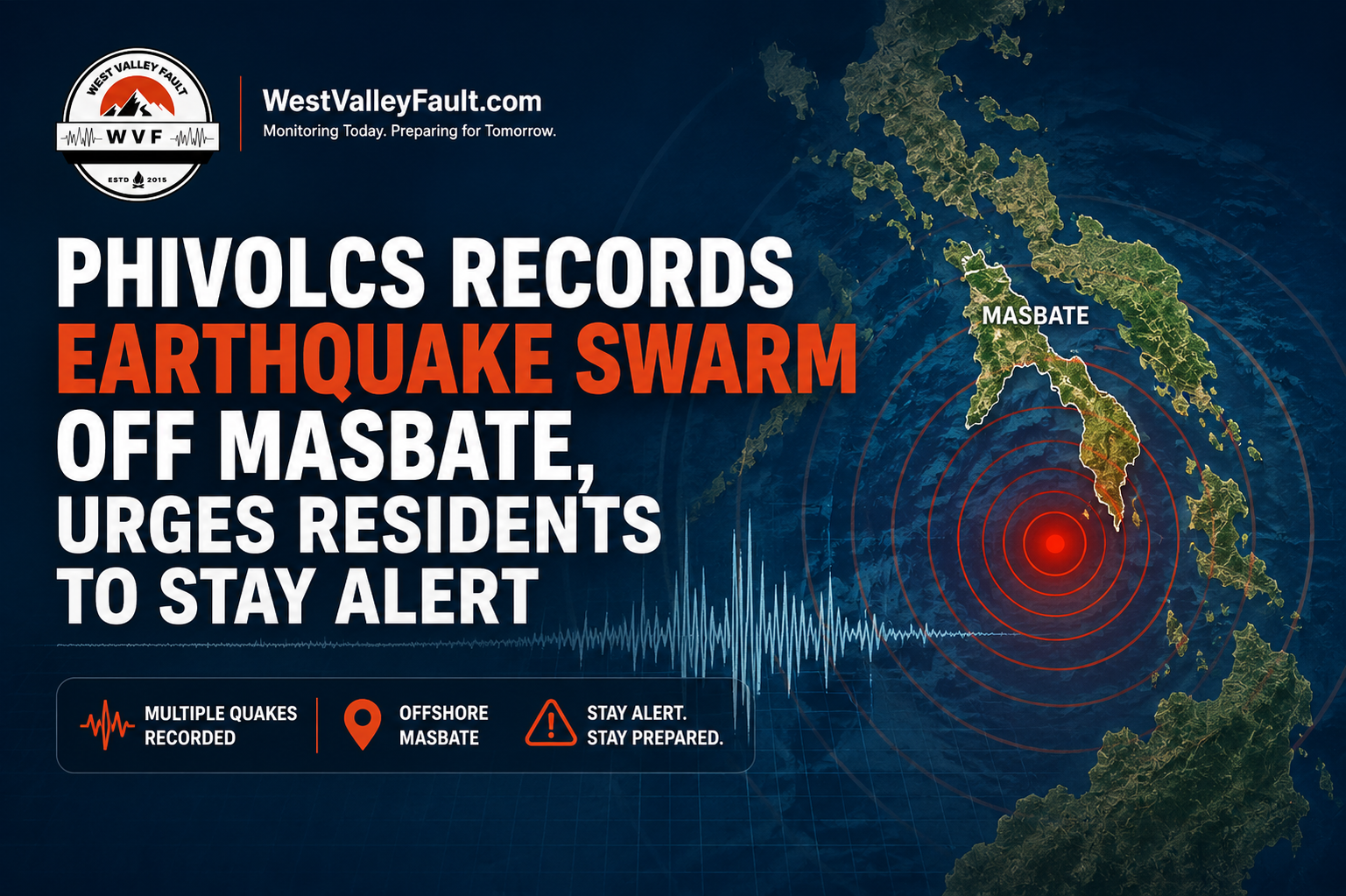
A magnitude 5.0 tectonic earthquake struck the Davao Occidental at 4:19 p.m. July 19, according to the Philippine Institute of Volcanology and Seismology (PHIVOLCS). The earthquake occurred at a depth of 10 kilometers, with its epicenter located 40 kilometers southeast of Balut Island in the Municipality of Sarangani.
PHIVOLCS reported that the earthquake was an aftershock of the June 2026 magnitude 7.8 earthquake offshore Sarangani and of the magnitude 6.5 offshore Davao Occidental earthquake. Based on the agency’s initial assessment, there were no damage, but aftershocks are to be expected.
At the time of publication, no official reports of casualties or significant structural damage had been released.
Earthquake Details
| Parameter | Value |
|---|---|
| Magnitude | 5.0 |
| Origin | Tectonic |
| Depth | 10 km |
| Epicenter | 40 km SE of Balut Island (Davao Occidental) |
| Coordinates | 05.05°N, 125.44°E |
| Reported Intensities |

AI-Assisted Content Disclosure:
The information below was generated with the assistance of artificial intelligence and is provided for general informational and educational purposes only. While every effort has been made to ensure accuracy and clarity, AI-generated content may contain errors, omissions, or interpretations that do not reflect the latest scientific findings or official guidance.
This content should not be considered a definitive or authoritative source for earthquake-related information. Readers are encouraged to verify important details with official agencies such as PHIVOLCS, the Office of Civil Defense (OCD), and other relevant government or scientific institutions before making decisions or taking action.
Always rely on official advisories during emergencies and disaster situations.
What Does Magnitude 5.0 Mean?
A magnitude 5.0 earthquake is considered a moderate earthquake. It is strong enough to be felt over a wide area, especially near the epicenter, and may cause light damage in older, poorly built, or already weakened structures.
For most modern buildings, a magnitude 5.0 earthquake is not usually expected to cause major structural damage. However, people may feel strong shaking, hanging objects may swing, small items may fall, and cracks may appear in vulnerable walls or structures close to the epicenter.
Because the magnitude scale is logarithmic, a magnitude 6.0 earthquake releases about 32 times more energy than a magnitude 5.0 earthquake, while a magnitude 7.0 earthquake releases roughly 1,000 times more energy.
The actual impact still depends on several factors, including the earthquake’s depth, distance from populated areas, ground conditions, and the quality of buildings nearby. A shallow magnitude 5.0 earthquake close to a community may feel much stronger than a deeper earthquake of the same magnitude farther away.
Why Did This Earthquake Happen?
The Philippines lies within the Pacific Ring of Fire, one of the world’s most active seismic belts. Earthquakes occur frequently as tectonic plates slowly move and interact beneath the Philippine archipelago.
According to PHIVOLCS, the earthquake was an aftershock of the June 2026 magnitude 7.8 earthquake offshore Sarangani and of the magnitude 6.5 offshore Davao Occidental earthquake.
This is a natural geological process and is not related to volcanic activity.
Is There a Tsunami Threat?
Based on the initial PHIVOLCS bulletin, no tsunami warning or advisory was issued for this earthquake.
Most inland earthquakes and many moderate offshore earthquakes do not generate tsunamis. Tsunami warnings are issued only when an earthquake has the characteristics capable of significantly disturbing the seafloor and producing hazardous sea waves.
Residents should always rely on official advisories from PHIVOLCS if an earthquake occurs near the coast.
Could Aftershocks Occur?
If PHIVOLCS indicates aftershocks are expected, residents should anticipate additional earthquakes in the coming hours or days. Aftershocks are a normal part of the earthquake cycle as the Earth’s crust adjusts following the main event.
Most aftershocks are smaller than the main earthquake, although some may still be strong enough to be felt.
Could This Trigger Other Earthquakes?
There is no evidence that this earthquake will trigger a major earthquake elsewhere in the country.
Moderate earthquakes can redistribute stress on nearby faults, but scientists cannot predict whether another earthquake will occur or exactly where it might happen. Each earthquake should be evaluated independently unless geological evidence later establishes a connection.
Key Takeaway
This earthquake serves as another reminder that the Philippines is one of the most seismically active countries in the world. While earthquakes cannot be predicted or prevented, their impacts can be greatly reduced through preparedness, resilient construction, and public awareness.
Residents are encouraged to monitor official updates from PHIVOLCS and local authorities as more information becomes available.
Safety Advice
If you felt the earthquake:
- Be prepared for possible aftershocks.
- Stay away from visibly damaged buildings and structures.
- Check your home for hazards such as gas leaks or damaged electrical wiring.
- Monitor only official information from PHIVOLCS and local disaster authorities.
- Avoid sharing unverified information on social media.
- Remember to Drop, Cover, and Hold On if another strong earthquake occurs.

Take the next step in your preparedness journey.
Download the FREE West Valley Fault™ Quick Start Guide and begin building your family’s emergency plan today.
References
- PHIVOLCS Earthquake Information Bulletin
- DOST-PHIVOLCS Earthquake Monitoring Service










Leave a Reply