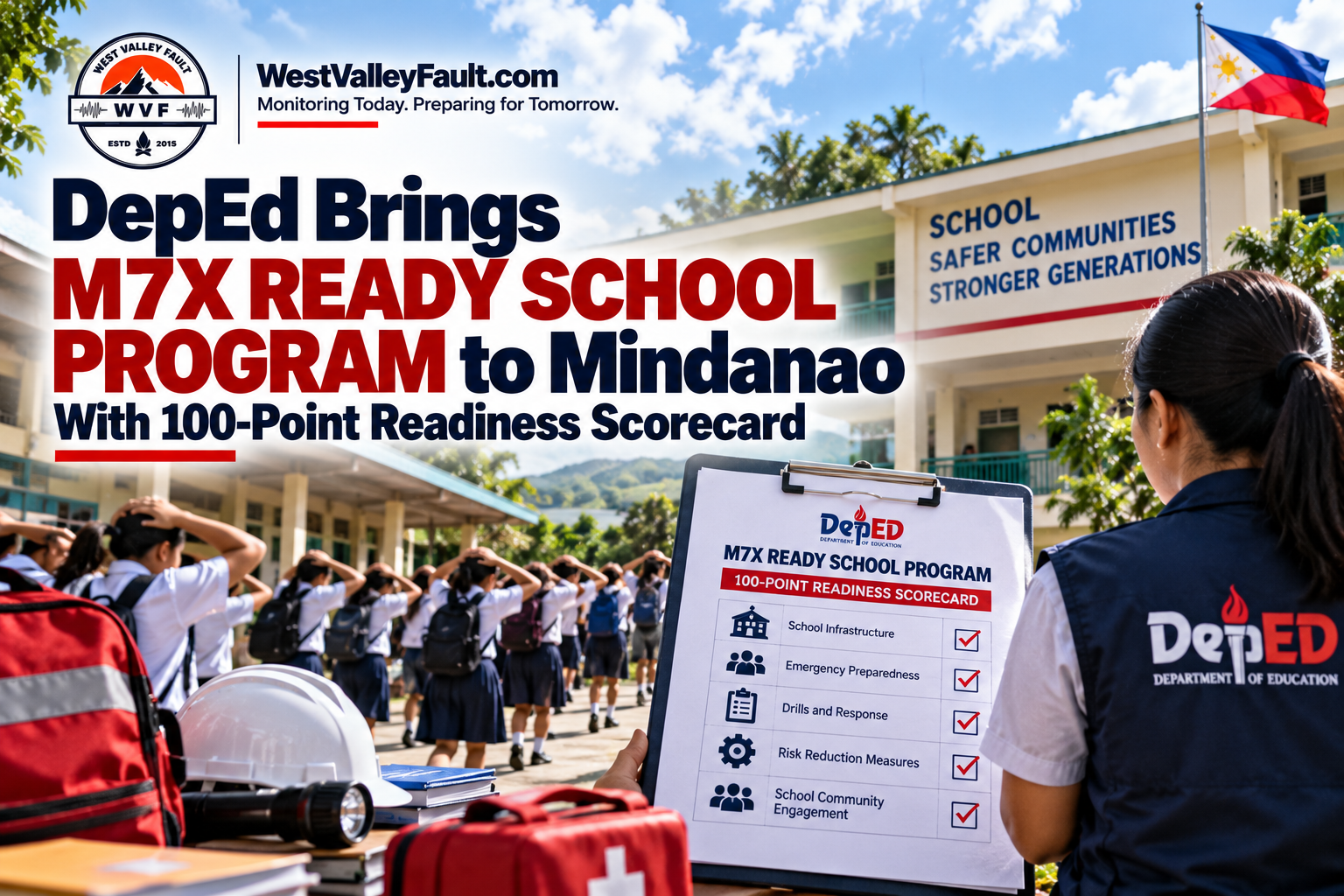
TAGUM CITY, DAVAO DEL NORTE — The Department of Education (DepEd) introduced its M7X Ready School Program to Mindanao participants at a regional earthquake-preparedness orientation in Tagum City, highlighting a 100-point school self-assessment tool designed to help schools identify weaknesses in readiness and improve emergency response planning.
The regional orientation was described in a SunStar Davao report published October 26, 2026, which said representatives of DepEd’s Disaster Risk Reduction and Management Service (DRRMS), Office of Civil Defense, DOST-PHIVOLCS, Philippine Red Cross and partner organizations discussed earthquake preparedness, structural safety and emergency response.
The 100-point scorecard is the operational centerpiece
Rather than limiting the event to a preparedness pledge, the program asks schools to assess their current readiness with a 100-point self-assessment instrument, identify gaps and determine where emergency arrangements require improvement. DepEd’s DRRMS Virtual Operations Center also hosts an M7X Ready School Program section and links to a school-readiness scorecard.
The publicly reported figure establishes the overall points-based format, but the SunStar account does not itemize each scoring criterion, disclose scores for participating schools, provide independent audit results or specify a threshold at which a school’s readiness has been externally verified. A self-assessment score should therefore not be presented as proof that a building is structurally safe.
Mindanao orientation follows the earlier national launch
The Tagum City event was a Mindanao Cluster orientation, not the original nationwide launch of M7X. DepEd announced the national program on April 30, 2026, initially targeting public schools across Greater Metro Manila—NCR, Central Luzon and Calabarzon—by the end of School Year 2026, with a stated aim of extending the program to public and private schools nationally by 2028.

DepEd division advisories issued in October also documented participation in Mindanao cluster activities. These show an organized orientation process but do not establish that every school in the region has completed the scorecard, received a readiness rating or resolved identified deficiencies.
Three goals: safety, damage reduction and education continuity
- Protect students and school personnel through stronger preparation for damaging earthquakes.
- Minimize damage to school property by recognizing vulnerabilities and strengthening planning.
- Restore education services sooner through post-event continuity and emergency-response arrangements.
The three stated goals come from the October 26 report. The initiative is framed around preparation for magnitude-7 or stronger earthquake scenarios, commonly discussed in relation to “The Big One.” It does not mean DepEd can predict a future earthquake’s date, magnitude or location.
What implementation evidence is still missing
The available reports identify the regional orientation and the tool’s intended purpose. They do not establish how many participating schools have submitted assessments, the scores they received, which weaknesses were corrected, whether structural inspections followed, or if readiness ratings have been independently validated.
Tracking those measures matters: a completed orientation or scorecard can support school-level planning, but practical safety gains depend on verified corrective action, functional response arrangements and, when required, qualified engineering assessment.
For households and school communities, WVF’s What Hazards Surround Your Child’s School? explores how to understand exposure around a campus. Its First 72 Hours family guide offers related preparedness steps beyond the school gates.
Stay Informed. Stay Prepared.
Get continuing earthquake intelligence, preparedness updates, Special Reports, and the WestValleyFault.com Weekly Earthquake & Preparedness Intelligence Report delivered to your inbox.

As a welcome gift, you’ll also receive the FREE WVF Earthquake Preparedness Quick Start Guide with practical first steps every household can take before a major earthquake.
Enter your email below to join the WVF email list. Unsubscribe anytime.
Recommended Further Reading
- What Hazards Surround Your Child’s School?
- The First 72 Hours After the Big One
- What Is the Manila Trench? Location, Formation, Earthquake and Tsunami Risks
- What Is the Cotabato Trench? Location, Earthquakes and Tsunami Risks
Sources
- SunStar Davao — DepEd Launches M7X Ready School Program to Prepare Schools for the Big One (October 26, 2026)
- Department of Education — National M7X Ready School Program launch (April 30, 2026)
- DepEd DRRMS — M7X Ready School Program and Scorecard resources




Leave a Reply