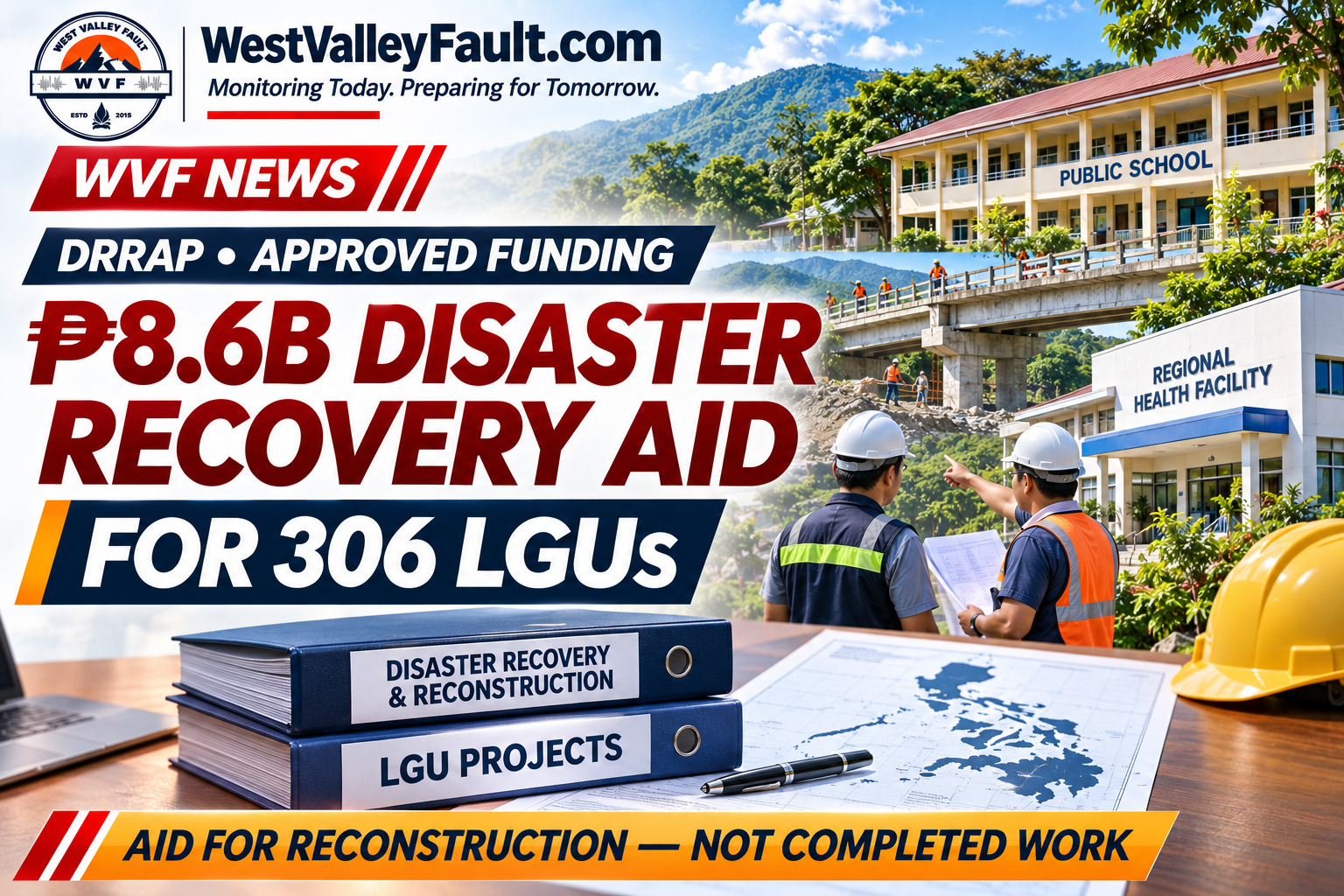
MANILA — The Philippine government has approved ₱8.6 billion in disaster rehabilitation and reconstruction assistance for 306 local government units affected by typhoons, earthquakes and volcanic eruptions from 2024 to 2026, President Ferdinand R. Marcos Jr. announced during the ceremonial turnover of funds at Heroes Hall, Malacañan Palace on November 5, 2026.
The assistance is being provided through the Disaster Rehabilitation and Reconstruction Assistance Program (DRRAP), which allows recipient LGUs to identify and prioritize reconstruction projects based on local damage and recovery needs, according to a Presidential Communications Office release published by the Philippine Information Agency.
Approved funding and releases
The official announcement puts the total approved assistance at ₱8.6 billion across 306 LGUs. It states that ₱6 billion has already been released, while a further ₱2.5 billion is being processed. The released amount is distinct from the total approved allocation. The release does not provide a province-by-province breakdown, a complete LGU beneficiary list, or individual project disbursements.
The announcement’s separately quoted ₱6-billion and ₱2.5-billion amounts add to ₱8.5 billion, not the stated ₱8.6-billion approved total. The source provides no explanation for the difference, so the figures are presented here as reported rather than reconciled into a new amount.
Rehabilitation projects covered
DRRAP assistance covers rehabilitation and reconstruction needs involving roads, bridges, schools, health facilities, evacuation centers, farms and housing damaged by disasters. The President said local government officials should identify the projects needed by their communities to restore essential services and livelihoods.
The November 5 ceremonial turnover and announcement of approved funding do not establish that each rehabilitation project has been selected, contracted, started or completed.
Damage reporting and local government responsibilities
Marcos urged LGUs to strengthen documentation and reporting of disaster damage to the Office of Civil Defense (OCD) and the National Disaster Risk Reduction and Management Council (NDRRMC). According to the PIA report, accurate damage reports are intended to help the national government assess recovery needs and direct assistance to affected communities.
A separate PIA release on November 5 describes the DRRAP as direct national financial assistance to LGUs recovering from calamities, with local officials given flexibility to identify priority rehabilitation and reconstruction work.
Why it matters to WestValleyFault.com
Earthquakes can damage roads, schools, hospitals, evacuation centers and other essential infrastructure. The DRRAP allocation covers local governments affected by earthquakes alongside other disasters and provides a source of rehabilitation funding for damaged facilities and services. The announced assistance concerns post-disaster recovery; it is not evidence that earthquake retrofitting or reconstruction has already been completed.
Related WVF coverage includes Bulacan’s 2027 disaster funding plan and resilience planning by Central Visayas LGUs.
Stay Informed. Stay Prepared.
Get continuing earthquake intelligence, preparedness updates, Special Reports, and the WestValleyFault.com Weekly Earthquake & Preparedness Intelligence Report delivered to your inbox.

As a welcome gift, you’ll also receive the FREE WVF Earthquake Preparedness Quick Start Guide with practical first steps every household can take before a major earthquake.
Enter your email below to join the WVF email list. Unsubscribe anytime.
Recommended Further Reading
- Bulacan Council Approves ₱525-Million Disaster Risk Reduction Plan for 2027
- World Bank-Backed Resilience Project Offers ₱50–70-Million Grants to Northern Mindanao Municipalities
- 23 Central Visayas LGUs Advance Resilience Plans Toward Project Development
- Seven Ilocos Sur Municipalities Begin Community-Led Disaster-Resilience Planning
- Orani Opens Procurement for 2027–2032 Disaster Plan and Earthquake, Fire, Flood Plans
Official Sources
- Philippine Information Agency / Presidential Communications Office — PBBM empowers LGUs to build stronger, more resilient communities (November 5, 2026)
- Philippine Information Agency / Presidential Communications Office — Gov’t strengthens partnerships with LGUs to bring development closer to communities (November 5, 2026)




Leave a Reply