
“Did You Know? #004— Earthquake Facts Explained
When Filipinos talk about “The Big One,” almost everyone knows what they mean—a powerful earthquake expected to occur along the West Valley Fault. But here’s something many people don’t realize:
“The Big One” isn’t an official scientific term.
Scientists don’t classify earthquakes as “The Big One.” Instead, they describe earthquakes using measurable information such as magnitude, fault type, location, depth, and ground shaking intensity. The phrase “The Big One” became popular because it is an easy way for the public and the media to refer to a potentially devastating earthquake that could affect Metro Manila and nearby provinces.
In the Philippines, the term is most commonly associated with a magnitude 7.2 earthquake expected to be generated by the West Valley Fault, based on studies conducted by PHIVOLCS and earthquake hazard scenarios developed with local and international partners.

What Exactly is The Big One and What Experts Are Saying About the Next Metro Manila Earthquake.
So why do scientists avoid using the term?
Because every major earthquake is different. Two earthquakes with the same magnitude can produce very different levels of damage depending on factors such as:
- How close you are to the fault
- The depth of the earthquake
- Local soil conditions
- Building design and construction quality
- Population density
For scientists, these details matter far more than a nickname.
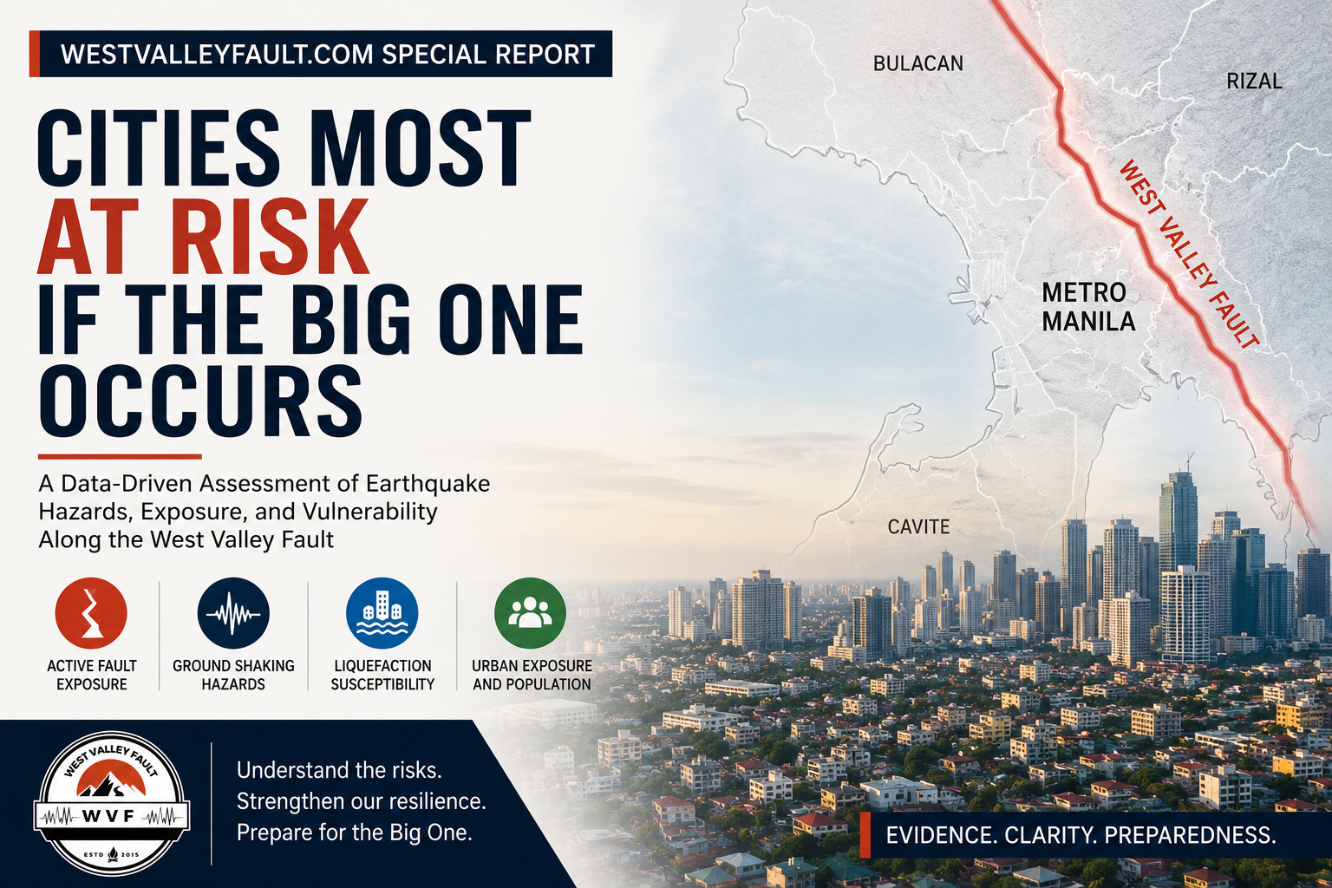
Find out if your Barangay is located near the West Valley Fault:
List of Barangays
For the public, however, “The Big One” serves an important purpose—it reminds us that a major earthquake is possible, even if no one can predict exactly when it will happen.
Why This Matters
Understanding what “The Big One” really means helps separate science from sensationalism. Earthquake preparedness isn’t about fearing a name—it’s about understanding the hazard and taking practical steps before it happens.
Preparedness Tip
Don’t prepare for “The Big One.” Prepare for any strong earthquake. A well-stocked go-bag, a family emergency plan, and knowing how to Drop, Cover, and Hold On can make a difference regardless of what the next earthquake is called.
Enjoyed this article?

Take the next step in your preparedness journey.
Download the FREE West Valley Fault™ Quick Start Guide and begin building your family’s emergency plan today.
Did You Know? is a continuing educational series by WestValleyFault.com, sharing quick, evidence-based facts about earthquakes, geology, and disaster preparedness in the Philippines.









Leave a Reply