

Week of July 5 – 11, 2026
Focus: Earthquake Activity & Public Preparedness
Issue #003
Executive Summary
This week underscored a growing shift in how the Philippines approaches earthquake resilience. Rather than responding only after seismic events occur, national agencies, local governments, emergency responders, and communities continued investing in preparedness through scientific collaboration, responder training, community planning, and public readiness initiatives.
While several magnitude 5.0 and above earthquakes reminded the country of its continuing seismic risk, the defining story of the week was not the earthquakes themselves. Instead, it was the steady effort to strengthen preparedness before the next major event occurs. From enhancing the capabilities of first responders and expanding science-based disaster planning to improving local readiness in earthquake-prone communities, this week’s developments reflect an increasingly proactive approach to disaster risk reduction.
Preparedness is no longer viewed as a single activity or annual exercise. It is becoming a continuous process that integrates science, governance, emergency response, infrastructure, and community participation. Collectively, the week’s developments demonstrate that resilience is built through sustained investment in people, institutions, and informed decision-making long before disaster strikes.
This Week’s Focus
Preparedness in Action: Communities Strengthen Earthquake Readiness Through Science, Training, and Local Resilience
If there was one lesson from this week’s developments, it is that preparedness is gradually becoming more localized, science-driven, and community-centered.
Across the country, local governments are working more closely with national agencies to strengthen their ability to prepare for future earthquakes rather than simply respond to their consequences. Instead of waiting for the next destructive event to expose weaknesses, communities are investing in training, planning, and scientific guidance to improve their readiness in advance.
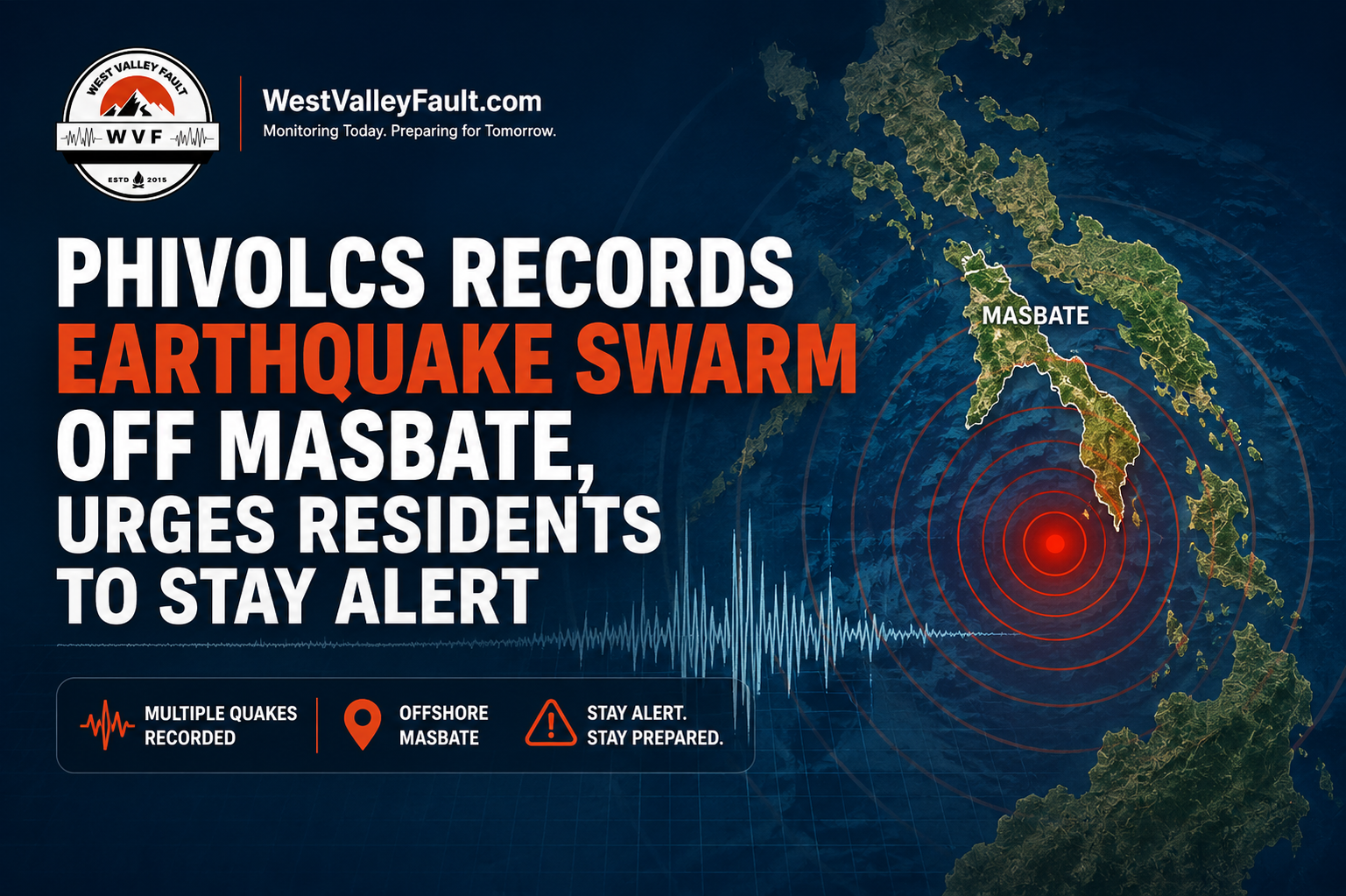
In Pangasinan, authorities continued to strengthen preparedness measures as offshore earthquake activity persisted near Bolinao. While PHIVOLCS maintained close monitoring of the earthquake swarm, local officials focused on ensuring that communities understood the situation, reviewed emergency procedures, and remained prepared should conditions change.

New marine geological research has revealed previously unmapped offshore fault systems, prompting scientists and local officials to call for updated earthquake and tsunami hazard assessments while emphasizing that the findings represent a reassessment of risk—not a prediction of future earthquakes.
At the same time, Eastern Samar demonstrated how science can directly support local disaster planning by partnering with the Department of Science and Technology to improve earthquake preparedness. By incorporating scientific expertise into local decision-making, communities are better positioned to understand their hazards, prioritize mitigation efforts, and develop evidence-based preparedness strategies.
Preparedness also depends on people who will respond when disasters occur. In Negros Oriental, first responders participated in simulation exercises designed to strengthen mass-casualty management and interagency coordination. These exercises help emergency personnel practice decision-making under pressure, identify operational gaps, and improve coordination before real emergencies test their capabilities.
Taken together, these initiatives highlight a broader transition in disaster risk reduction. Preparedness is no longer limited to evacuation drills or emergency supplies. It now encompasses scientific research, technical training, institutional coordination, community engagement, and continuous capacity building across multiple sectors.
This approach recognizes an important reality: while earthquakes cannot be prevented, their consequences can be significantly reduced when communities understand their risks, responders are properly trained, government agencies coordinate effectively, and decisions are guided by sound science.
As seismic activity continues across the Philippines, these quieter investments in preparedness may prove to be among the country’s most valuable long-term defenses against future disasters.
Top Developments
1. Pangasinan Strengthens Preparedness as Offshore Earthquake Swarm Persists
Source: Philippine Information Agency – Disaster Information Service
Authorities in Pangasinan have intensified preparedness efforts as offshore earthquake activity continues near Bolinao. Local government agencies are working closely with PHIVOLCS to monitor the situation while reviewing emergency response plans, coordinating with disaster management offices, and keeping communities informed of official advisories. Although no tsunami warning has been issued, residents in coastal areas have been encouraged to remain vigilant and familiarize themselves with natural tsunami warning signs.
2. Negros Oriental First Responders Sharpen Disaster Response Through Simulation Exercise
Source: Philippine News Agency
First responders in Negros Oriental participated in a mass casualty management simulation exercise designed to improve coordination during large-scale emergencies. The activity brought together emergency medical personnel, rescue teams, hospitals, and local government agencies to practice incident command, patient triage, emergency transport, and interagency communication under realistic disaster scenarios.
3. Eastern Samar Strengthens Earthquake Preparedness Through Science-Based Planning
Source: Daily Tribune
The provincial government of Eastern Samar partnered with the Department of Science and Technology (DOST) to strengthen local earthquake preparedness through science-based planning and technical guidance. The initiative aims to help local governments better understand seismic hazards, improve disaster risk reduction planning, and incorporate scientific data into preparedness and resilience programs.

This in-depth analysis explores how fault-line proximity influences real estate prices in 2026.
Government Preparedness
Pangasinan
• Ramps Up Readiness as Offshore Quakes Persist Near Bolinao
See: Top Developments #1
Source: Philippine Information Agency
Pangasinan
• Pangasinan Partners with Private Companies in its Response Operations
Pangasinan signed a memorandum of agreement (MOAs) with private companies and national government agencies as part of its goal of augmenting its mass casualty incident response operations. This is to ensure continuous delivery of services to residents through a line of credit as payment processing could be difficult during calamities.
Source: Philippine Information Agency
Negros Oriental
Negros Oriental First Responders Sharpen Disaster Response Through Simulation Exercise
See: Top Developments #2
Source: Philippine News Agency
Eastern Samar
- Eastern Samar Strengthens Earthquake Preparedness Through Science-Based Planning
See: Top Developments #3
Source: Daily Tribune
La Union
- Bangar and Bagulin to Host La Union’s First Ligtas Pinoy Centers
The municipalities of Bangar and Bagulin will establish La Union’s first Ligtas Pinoy Centers, expanding community-based disaster preparedness infrastructure in the province. The centers are intended to support emergency operations, evacuation, coordination, and disaster response, strengthening local government capacity to protect communities during emergencies.
Source: Philippine Information Agency
Research & Monitoring
• PHIVOLCS Continues Monitoring the Offshore Pangasinan Earthquake Swarm
PHIVOLCS continued monitoring the offshore earthquake swarm west of Bolinao, Pangasinan, while maintaining close observation of seismic activity in the area. Local authorities remain in coordination with the agency as scientific monitoring continues to assess developments and provide timely advisories should conditions change.
Source: Philippine Information Agency
• PHIVOLCS Advises Continued Vigilance Amid Ongoing Seismic Activity
As monitoring continues, PHIVOLCS reminded coastal communities to remain informed through official advisories and to be aware of natural tsunami warning signs, including strong or prolonged ground shaking, unusual sea-level changes, or a loud roaring sound coming from the sea. While no tsunami warning was issued during the reporting period, public awareness remains an important component of scientific monitoring and risk communication.
Source: Philippine Information Agency
Infrastructure & Policy
La Union
- Bangar and Bagulin to Host La Union’s First Ligtas Pinoy Centers
The municipalities of Bangar and Bagulin will establish La Union’s first Ligtas Pinoy Centers, expanding community-based disaster preparedness infrastructure in the province. The centers are intended to support emergency operations, evacuation, coordination, and disaster response, strengthening local government capacity to protect communities during emergencies.
Source: Philippine Information Agency
Earthquake Activity This Week
Most Significant Event
| Date & Time (PST) | Latitude (°N) | Longitude (°E) | Depth (km) | Magnitude | Location |
|---|---|---|---|---|---|
| 06 July 2026 – 4:11 PM | 5.37 | 125.13 | 18 | 6.0 | 47 km S 16° W of Balut Island (Municipality of Sarangani), Davao Occidental |
| 06 July 2026 – 4:41 PM | 5.28 | 125.08 | 22 | 5.3 | 57 km S 11° W of Balut Island (Municipality of Sarangani), Davao Occidental |
| 07 July 2026 – 3:16 PM | 3.24 | 126.95 | 96 | 5.5 | 351 km S 40° E of Balut Island (Municipality of Sarangani), Davao Occidental |
Overall Assessment
No new nationally destructive earthquake dominated the reporting period, but the Pangasinan swarm and Sarangani earthquake both reinforced the importance of continued monitoring and public preparedness.
Source: PHIVOLCS-related media reports
Community Preparedness
Community preparedness remained a major focus this week.
Pangasinan
• Communities in Pangasinan Remain Vigilant Amid Offshore Earthquake Swarm
Local authorities continued encouraging residents, particularly in coastal communities, to stay informed through official PHIVOLCS advisories, review evacuation procedures, and recognize natural tsunami warning signs as offshore seismic activity persisted near Bolinao.
Sources: Philippine Information Agency
Eastern Samar
• Science-Based Planning Strengthens Community Resilience in Eastern Samar
Eastern Samar’s partnership with the Department of Science and Technology demonstrates how scientific hazard information can support local governments and communities in making better-informed decisions on earthquake preparedness, land use, and disaster risk reduction.
Source: Daily Tribune
• Ligtas Pinoy Centers to Enhance Community Emergency Readiness in La Union
The establishment of the province’s first Ligtas Pinoy Centers will provide communities with dedicated facilities for evacuation, emergency coordination, and disaster response, strengthening local resilience during earthquakes and other hazards.
Source: Philippine Information Agency
This Week in Numbers
| Metric | Value |
|---|
| Top Developments Featured | 3 |
| Government Preparedness Initiatives | 4 |
| Research & Monitoring Updates | 2 |
| Infrastructure & Policy Developments | 1 |
| Community Preparedness Initiatives | 3 |
| Significant Earthquakes (M5.0+) | 3 |
| Highest Recorded Magnitude | 6.0 |
| Reporting Period | July 5–11, 2026 |
Preparedness Spotlight
Negros Oriental First Responders Strengthen Disaster Response Through Realistic Simulation Training
One of the week’s most encouraging developments came from Negros Oriental, where first responders participated in a mass casualty management simulation exercise designed to strengthen emergency response capabilities during large-scale disasters.
The exercise brought together emergency medical personnel, rescue teams, hospitals, and local government agencies to practice coordinated disaster response under realistic conditions. Participants rehearsed critical procedures such as incident command, patient triage, emergency transport, and interagency coordination—skills that become essential during major earthquakes and other mass-casualty incidents.
While simulation exercises rarely make national headlines, they are among the most effective ways to improve disaster response. They allow responders to identify operational gaps, refine emergency procedures, and strengthen coordination before real emergencies occur.
As communities continue investing in preparedness, initiatives like these demonstrate that resilience depends not only on planning but also on regularly testing and improving response capabilities.
The Bigger Picture
This week’s developments suggest that earthquake preparedness in the Philippines is becoming increasingly proactive, collaborative, and science-driven. Across multiple regions, local governments, national agencies, and emergency responders continued investing in measures that strengthen resilience before disasters occur, rather than relying solely on post-disaster response.
Several of this week’s initiatives shared a common characteristic: preparedness is being integrated into everyday governance. Whether through responder training, scientific partnerships, improved monitoring, or the development of resilient community infrastructure, disaster risk reduction is gradually becoming part of routine planning rather than a stand-alone activity.
The reporting period also demonstrated the importance of sustained vigilance. Continued seismic activity in offshore Pangasinan and several magnitude 5.0 and above earthquakes served as reminders that the Philippines remains one of the world’s most seismically active countries. While these events caused limited impacts, they reinforce the need for continuous monitoring, regular preparedness activities, and informed public awareness.
As more local governments adopt evidence-based planning and strengthen coordination with national agencies, the country’s overall resilience continues to improve. Maintaining this momentum will require consistent investment in scientific monitoring, emergency response capability, resilient infrastructure, and community preparedness to ensure that future earthquakes result in fewer casualties, reduced damage, and faster recovery.
Looking Ahead
As the Philippines continues to strengthen earthquake resilience, several developments from this week are expected to remain in focus over the coming days:
- Continued Monitoring of the Pangasinan Offshore Earthquake Swarm – PHIVOLCS is expected to maintain close observation of seismic activity west of Bolinao while local authorities continue preparedness measures.
- National Disaster Resilience Month Activities – Government agencies and local government units are expected to sustain earthquake preparedness campaigns, emergency drills, responder training, and public awareness activities throughout July.
- Expansion of Local Preparedness Initiatives – More provinces and municipalities may announce science-based preparedness programs, responder capability-building activities, and community resilience projects as part of ongoing disaster risk reduction efforts.
- PHIVOLCS Advisories and Significant Earthquake Activity – As always, official advisories and any significant earthquakes (Magnitude 5.0 and above) will continue to be closely monitored and reported in the next issue of the Weekly Intelligence Report.
30-Second Takeaway
- Earthquake preparedness remained the dominant theme this week, with local governments, responders, and national agencies strengthening readiness across multiple regions.
- Pangasinan continued heightened preparedness as PHIVOLCS monitored the ongoing offshore earthquake swarm near Bolinao.
- Negros Oriental enhanced emergency response capability through a mass casualty simulation exercise involving first responders and partner agencies.
- Eastern Samar advanced science-based disaster preparedness through its collaboration with the Department of Science and Technology (DOST).
- Bangar and Bagulin will establish La Union’s first Ligtas Pinoy Centers, expanding local disaster resilience infrastructure.
- Three significant earthquakes (Magnitude 5.0 and above) were recorded by PHIVOLCS during the reporting period, reinforcing the importance of continuous preparedness and public awareness.
Preparation always starts in the family.

Take the next step in your preparedness journey.
Download the FREE West Valley Fault™ Quick Start Guide and begin building your family’s emergency plan today.
Recommended Further Reading
- How the Proximity to the West Valley Fault Affects Property Values in 2026
- Earthquake Preparedness for Businesses and Industries
- Ideas to Secure Your House Against Earthquakes: Simple Steps for Safety in the Philippines
- Preparing for the Big One: Essential Earthquake Survival Kit for Filipinos
References
Philippine Information Agency (PIA)
- Pangasinan Ramps Up Readiness as Offshore Quakes Persist Near Bolinao
- Bangar and Bagulin to Host La Union’s First Ligtas Pinoy Centers
Philippine News Agency (PNA)
Daily Tribune
PHIVOLCS













Leave a Reply