
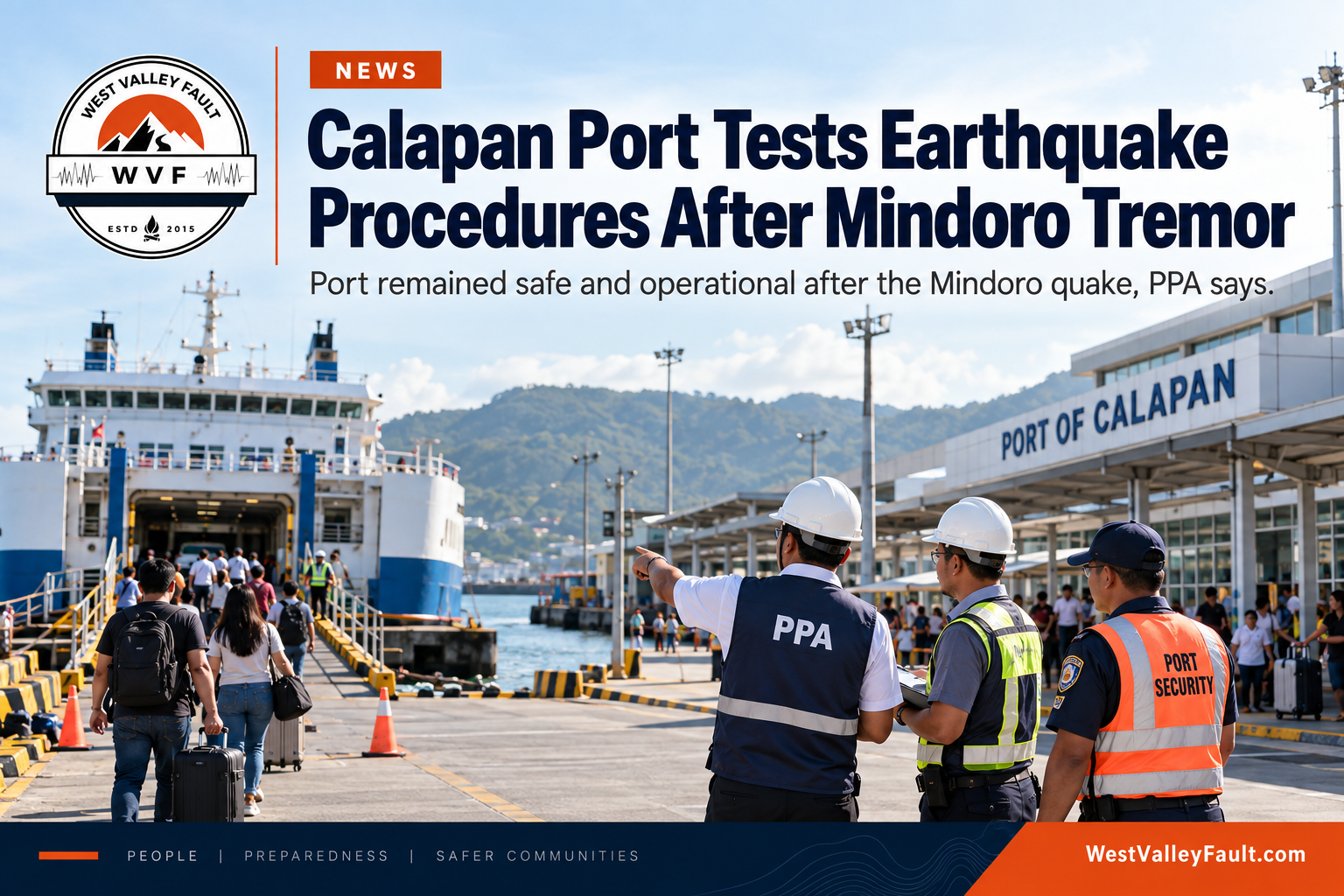
CALAPAN CITY — The Philippine Ports Authority said the Port of Calapan remained safe and operational after the September 30 earthquake near Mamburao, Occidental Mindoro, while port personnel carried out established earthquake-readiness procedures focused on evacuation, accountability and facility checks.
PPA reported on October 1 that no damage to port facilities and no injuries were recorded at Calapan. Personnel remained on alert for any impact on port operations, passengers and other port users.
PPA’s report referred to the event as a magnitude 5.0 earthquake, reflecting PHIVOLCS’ initial automatic solution. PHIVOLCS later finalized the event at Mw 4.8, located 19 kilometers southwest of Mamburao at a depth of 24 kilometers.
Port procedures emphasize evacuation, accountability and facility checks
PPA said its earthquake-readiness procedures emphasize rapid evacuation, accounting for personnel, assessing facility conditions and following established emergency protocols before normal activity is resumed or adjusted.
The authority also pointed to continuing emergency drills and response exercises, including participation in the third-quarter Nationwide Simultaneous Earthquake Drill at the PPA Head Office and Port Management Offices nationwide.
For a passenger and transport gateway such as Calapan, these procedures are intended to establish whether people are safe, whether port structures and operating areas remain usable, and whether services can continue without introducing additional risk after shaking.

PHIVOLCS records Intensity III in Calapan
PHIVOLCS’ final bulletin recorded Intensity III in Calapan City, along with Intensity IV in several parts of Occidental Mindoro and Baco in Oriental Mindoro. The agency said no damage and no aftershocks were expected from the Mw 4.8 event.
Why it matters for earthquake preparedness
The significance of the Calapan Port report is not the earthquake magnitude itself but the operational response at a major transport facility. Ports can become critical for passenger movement, supply continuity and inter-island logistics after a damaging earthquake, making evacuation, personnel accounting, inspection and continuity procedures part of wider disaster resilience.
WVF has previously tracked earthquake activity affecting Mindoro, including the August 2026 Occidental Mindoro earthquake and its Manila Trench context, as well as nationwide earthquake-drill preparations involving public institutions.
No damage reported, but readiness procedures remain the key takeaway
The September 30 earthquake did not produce reported damage at Calapan Port, and PHIVOLCS did not expect damaging effects or aftershocks. PPA’s report therefore serves primarily as an operational-readiness check: whether personnel followed established procedures and whether the facility could remain safely in service after shaking.
Stay Informed. Stay Prepared.
Get continuing earthquake intelligence, preparedness updates, Special Reports, and the WestValleyFault.com Weekly Earthquake & Preparedness Intelligence Report delivered to your inbox.

As a welcome gift, you’ll also receive the FREE WVF Earthquake Preparedness Quick Start Guide with practical first steps every household can take before a major earthquake.
Enter your email below to join the WVF email list. Unsubscribe anytime.
Recommended Further Reading
- Mindoro M5.4 Earthquake Came from Manila Trench—Not the West Valley Fault
- Nationwide Earthquake Drill Set for March 12: Local Governments and Schools Urged to Participate
- Meralco Stages Major Earthquake Readiness Drill to Bolster Disaster Resilience
Sources
- Philippine Ports Authority — Calapan Port earthquake-readiness report, October 1, 2026
- PHIVOLCS — Final earthquake bulletin, September 30, 2026 Mamburao event
- PHIVOLCS — Initial automatic earthquake bulletin, September 30, 2026 Mamburao event




Leave a Reply