
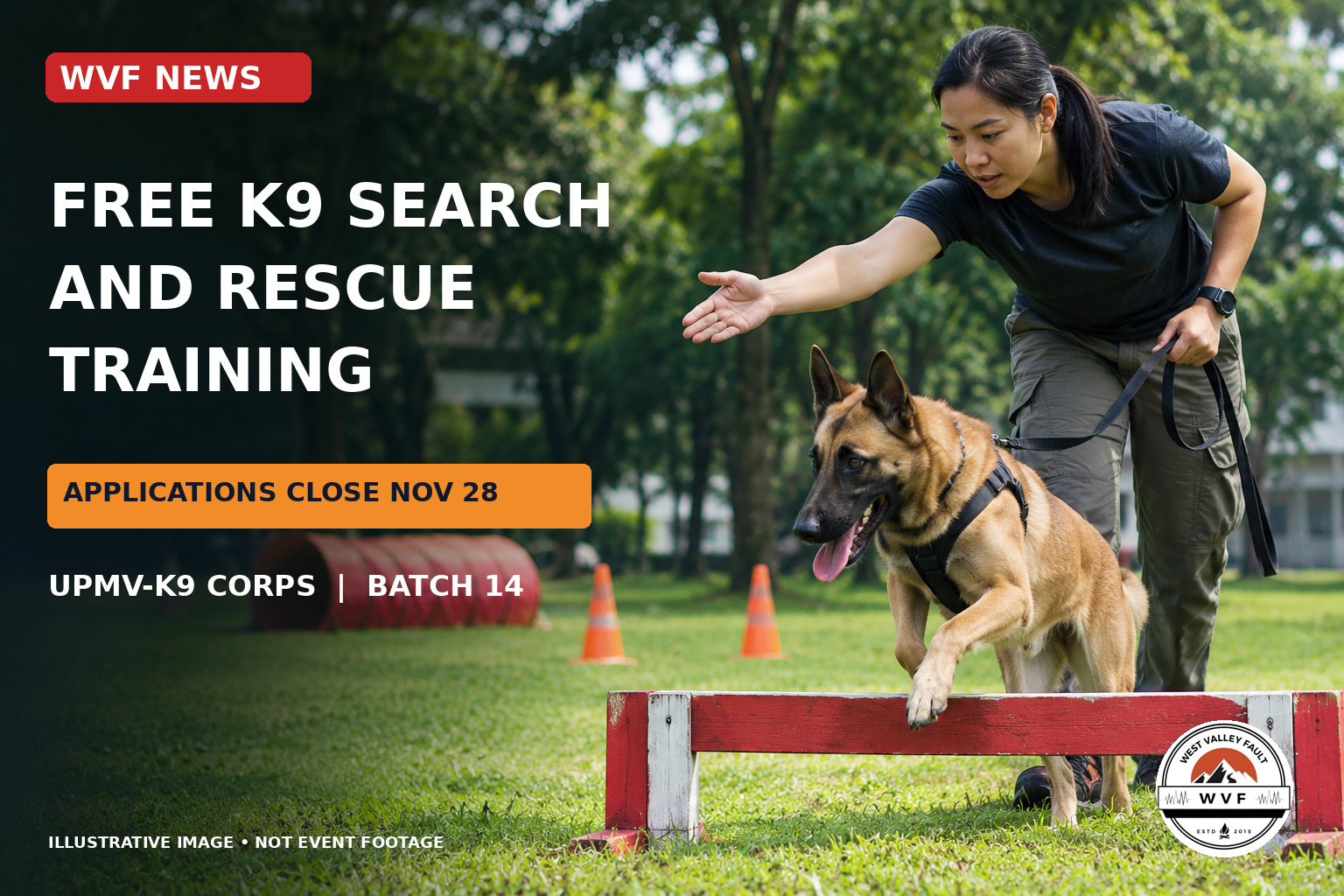
QUEZON CITY, Philippines — The UPMV-K9 Search and Rescue Corps is accepting applications for its 14th free volunteer training batch, inviting eligible dog owners in Metro Manila and nearby provinces to develop canine-handling and disaster-response skills. Applications close November 28, 2026. The announcement was reported on November 11 by Philippines Graphic and Kuryente News.
The program covers dog handling, obedience, agility, introductory search-and-rescue techniques and disaster readiness. The organization says the effort aims to strengthen civilian volunteer capacity and encourage families to include pets in emergency planning.

Who can apply and how to register
Applicants should be of legal age and have a healthy dog, according to the published Batch 14 information. The reporting describes an ideal dog age of eight months to five years; snub-nosed breeds undergo additional health-and-safety screening. Prospective volunteers should check current requirements with the organizers before applying.
Registration deadline: November 28, 2026. Interested applicants can use the UPMV-K9 Batch 14 registration form and monitor their email for further instructions. Training is described as free; the reports do not establish that all applicants will be accepted.

Why the program matters for “The Big One”
A major West Valley Fault earthquake could place severe demands on emergency responders across Metro Manila. Community volunteer training can complement the Philippines’ 10-year urban search-and-rescue strategy and the PNP, AFP and PCG’s Big One response exercises, while responsible pet ownership and evacuation planning can reduce risks to animals and families. The opening of a new training batch is an opportunity to build skills before an emergency, not evidence that a major earthquake is imminent.
UPMV-K9 is based at the University of the Philippines Diliman and was established in 2017 with support from UP Vanguard. Its training progression also includes advanced topics such as first aid, basic life support and personal survival, although not every module is necessarily included in the introductory batch.
WVF context: A trained volunteer and dog team requires ongoing practice, appropriate supervision and coordination with authorized responders. Pet owners who are not joining the program can still use WVF’s first 72 hours family survival guide and prepare by identifying pet-friendly evacuation options and keeping food, water, identification and a carrier or leash ready.
Stay Informed. Stay Prepared.
Get continuing earthquake intelligence, preparedness updates, Special Reports, and the WestValleyFault.com Weekly Earthquake & Preparedness Intelligence Report delivered to your inbox.

As a welcome gift, you’ll also receive the FREE WVF Earthquake Preparedness Quick Start Guide with practical first steps every household can take before a major earthquake.
Enter your email below to join the WVF email list. Unsubscribe anytime.
Recommended Further Reading
These five WVF reports explain related preparedness challenges, community response capacity, and practical steps for safer homes and neighborhoods.
- November 5 Earthquake Drill: Local Reports Nationwide — Examples of how local institutions tested emergency response procedures.
- Bulacan Police Test Earthquake Response — How public-safety teams practiced coordinated disaster response.
- Army’s 525th Battalion Reaffirms Urban Rescue Readiness — How a specialized military rescue unit maintains disaster-response capabilities.
- After an Earthquake: Why Building Inspections Aren’t Enough — Why ground conditions matter to post-disaster safety decisions.
- Cities Most at Risk If the Big One Strikes — Why population, buildings and local ground conditions influence the potential impact.
Sources
- ASTIG — UPMV-K9 Corps free training announcement
- Philippines Graphic — November 11, 2026
- Kuryente News — November 11, 2026




Leave a Reply