
For years, the “Big One” has been a topic of hushed conversations and sensationalist headlines across Metro Manila. Since the first major publications about the West Valley Fault surfaced in 2003, the narrative has often been one of fear. But as we’ve learned in the decades since, fear doesn’t save lives—preparation does.
Whether you live in the heart of Marikina, the hills of Rizal, or the bustling streets of Quezon City, your home is likely your most significant financial investment and your family’s primary sanctuary. But is that sanctuary built to withstand the unique geological realities of our region?
Understanding your home’s structural integrity isn’t just about disaster readiness; it’s about financial wisdom. In a city where a fault line runs beneath our feet, a “prepared mind” includes knowing exactly where your house stands—literally and structurally.
In this guide, we’re moving past the hype. We are going to walk through a practical, engineer-backed checklist to help you assess your property, identify potential red flags, and ensure that your family remains safe and your assets remain protected.
The “Know Your Zone” Assessment: Mapping Your Risk
Before you pick up a flashlight to inspect your walls, you need to understand the ground beneath your feet. In Metro Manila, geological safety isn’t a guessing game—it’s a data-driven science.

Using the PHIVOLCS FaultFinder
One of the most essential tools in your kit is the PHIVOLCS FaultFinder. This web-based app allows you to pin your exact location to see its proximity to the nearest active fault.
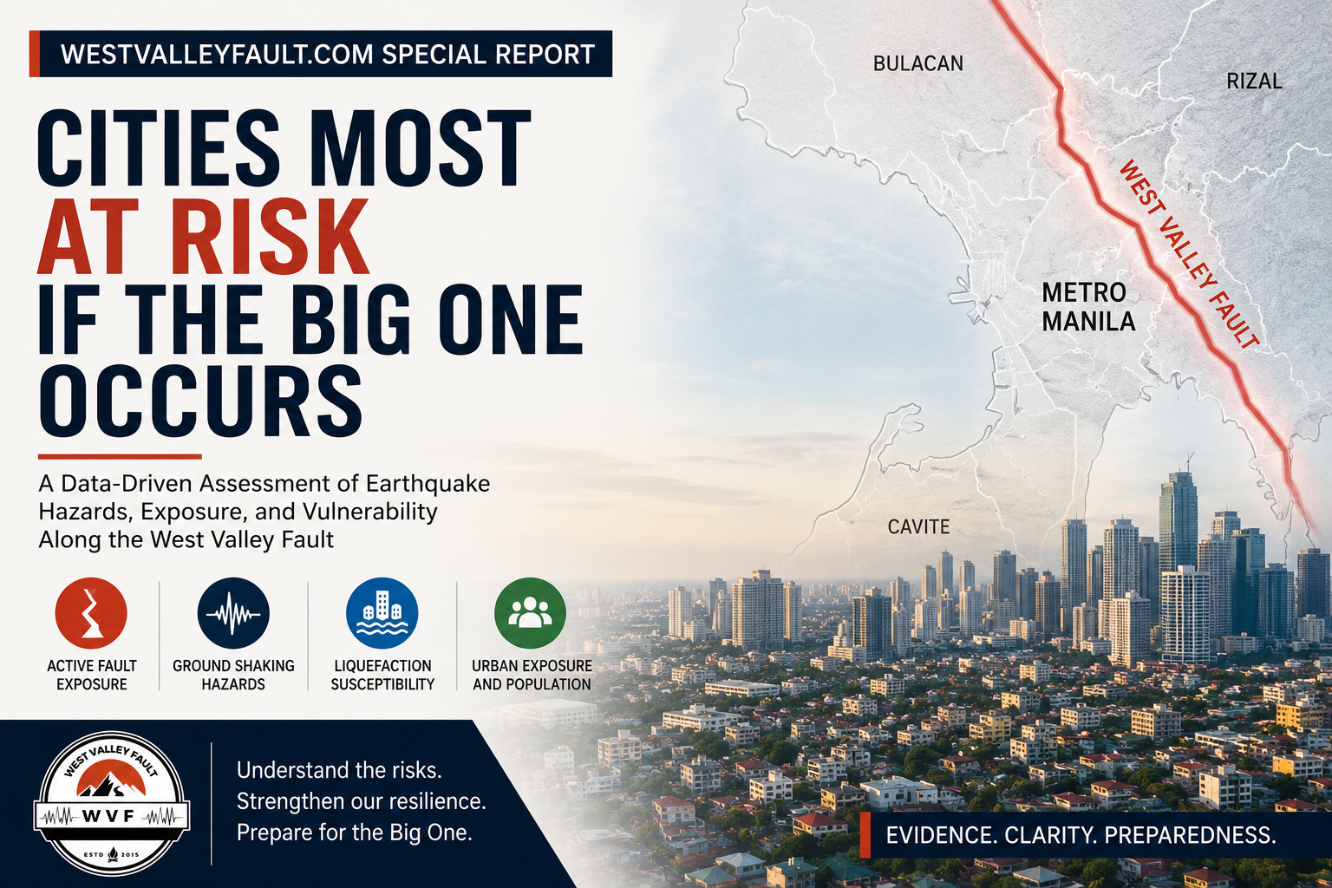
The Goal: You are looking for your distance from the West Valley Fault, a 100-kilometer segment that runs through parts of Bulacan, Rizal, Metro Manila (including Marikina, Quezon City, Pasig, Makati, Taguig, and Muntinlupa), Cavite, and Laguna.
The “Safe” Distance: The Department of Science and Technology (DOST) and PHIVOLCS recommend a 5-meter buffer zone on both sides of the fault line.
Why the 5-Meter Rule Matters
If you find that your property falls within or immediately adjacent to this 5-meter wide “hazard zone,” it doesn’t mean you should panic—it means you should prioritize structural reinforcement.
It’s important to remember that ground rupture (the ground actually splitting) occurs along an active fault and can affect the surrounding zone of deformation—not just a single narrow line on the ground. And that, ground shaking can be felt kilometers away. This is why knowing your zone isn’t just about the “line”; it’s about understanding the soil type and building requirements specific to your neighborhood. (We’ll deal more on this on our next blog.)
Is Your Home Ready for the Big One?

Fault proximity is only one part of your risk. Learn what families should inspect before a major earthquake happens.
A location does not need to sit directly on an active fault to face earthquake hazards. Use this practical checklist to investigate a property before buying, renting or relocating.
✓ Check active fault proximity
✓ Review shaking, liquefaction, tsunami and landslide hazards
✓ Examine building safety and community preparedness
✓ Find the official government maps and documents to consult
Small disclaimer: This checklist is an educational screening tool—not an official hazard assessment or guarantee of safety.
The Structural Integrity Checklist: A Homeowner’s 4-Point Inspection
You don’t need to be a civil engineer to spot the most common warning signs. Grab a flashlight and a notepad, and walk through these four critical areas of your home.
1. The Foundation and “X-Cracks”
Walls tell stories. While thin, vertical “hairline” cracks are often just the house settling, diagonal cracks (shaped like an ‘X’ or a ‘V’) are a major red flag.

- What to look for: Cracks that are wider than a pencil (3mm-5mm) or cracks that run diagonally from the corners of doors and windows.
- The Risk: These suggest that the house’s frame is under stress and might not hold up during intense lateral (side-to-side) shaking.
2. The “Soft Story” Vulnerability
Many homes in Metro Manila are designed with an open ground floor for parking (common in townhouses).

- The Check: Does your second floor sit on top of relatively thin pillars with no solid walls on the ground level?
- The Risk: This is known as a “Soft Story.” Without “shear walls” (solid concrete walls) to provide stability, the ground floor can collapse or “pancake” under the weight of the upper floors during an earthquake.
3. Hollow Block Quality and Mortar
In the Philippines, many older homes were built using 4-inch “standard” hollow blocks that may not have enough steel reinforcement (rebars).

- The Check: If you are doing renovations, check the spacing of the vertical rebars. Modern safety standards usually suggest a distance of no more than 40cm to 60cm between bars.
- The Risk: Brittle walls without enough steel can crumble rather than flex when the ground moves.
4. Overhangs, Parapets, and Chimneys
Look up. Anything that sits above your living space can become a hazard if it isn’t secured.

- The Check: Inspect heavy roof tiles, decorative parapets on the roofline, or heavy water tanks.
- The Risk: These items can become dislodged and fall through the roof or onto exits, blocking your path to safety.
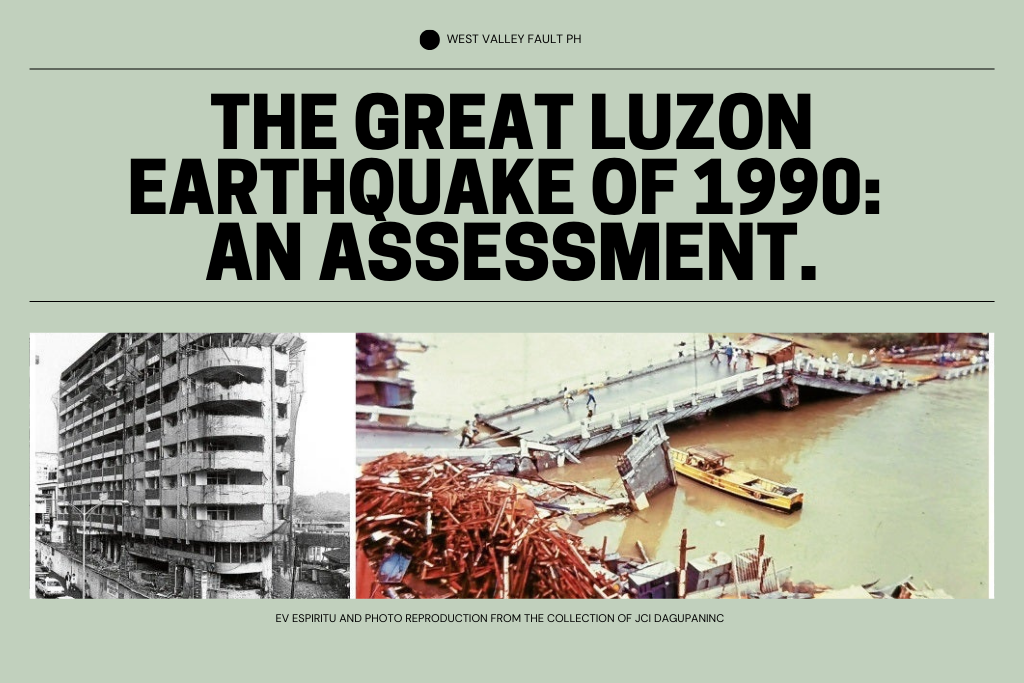
Inspecting your home is only one part of earthquake preparedness. Understanding why buildings fail—and what engineers, government agencies, and property owners can do to reduce those risks—provides important context. For a broader look at structural resilience in the Philippines, read our Special Report: The Big One Is Not the Biggest Threat—Our Buildings Are.

Earthquakes can strike without warning, making preparedness essential for businesses operating around the world. This guide outlines practical steps to protect employees, secure facilities, strengthen supply chains, and ensure rapid recovery through effective business continuity planning.
Financial Resilience: The Insurance Link
Structural reinforcement is your first line of defense, but financial resilience is what ensures you can rebuild if the unthinkable happens. In the Philippines, many homeowners mistakenly believe their standard fire insurance or bank-mandated mortgage insurance covers everything.
The “Acts of Nature” Gap
Standard fire insurance policies often do not automatically include earthquake coverage.

- The Check: Look for the “Acts of Nature” (AON) or “Acts of God” clause in your policy. This is what covers damage from earthquakes, floods, and typhoons.
- The Strategy: If your current policy lacks this, contact your provider to add an endorsement. It is often a small increase in premium for a massive increase in peace of mind.
Documenting for a Smoother Claim
Insurance companies require proof. To ensure a “painless” claims process later, you need to “prep” your digital trail today:
- The 360-Degree Walkthrough: Take clear photos and videos of your home’s current state—especially the beams, columns, and foundation points we discussed in the checklist.
- Inventory of Assets: Keep a digital list of high-value items within the home.
- The “Fireproof” Digital Vault: Store digital copies of your Land Title (TCT), Insurance Policy, and IDs in a secure cloud drive. If your physical copies are lost in a disaster, your digital ones will be your lifeline.
Next Steps: Finding a Professional Evaluation
If your self-check revealed diagonal cracks or “soft story” concerns, your next step is to consult a professional. Only a licensed Civil or Structural Engineer can perform a “Structural Audit” to determine if your home needs retrofitting.
For official guidance, building permits, or to find city-accredited engineers, you can reach out to the City Engineering Office or Office of the Building Official (OBO) in your respective city.
🏢 Metro Manila Building Official Directory
Pro-Tip: When hiring a private consultant, ensure they are a member in good standing of the Association of Structural Engineers of the Philippines (ASEP). A structural audit typically includes a visual inspection, material testing (like a “Schmidt Hammer” test for concrete), and a final recommendation report.
Conclusion: From Anxiety to Action
The West Valley Fault has been a part of our landscape for millennia, but it doesn’t have to be a source of constant “what-ifs.” By taking the time to walk through this checklist, understanding your insurance coverage, and knowing who to call for professional help, you’ve already done more than most to protect your future.
A “prepared mind” is the most powerful tool in any disaster. Your home is more than just four walls—it’s the foundation of your family’s safety. Take the first step today: download the PHIVOLCS checklist, check your policy, and start the conversation with your neighbors.
Nothing can save a life more than a prepared mind. Let’s build a more resilient Metro Manila together.
📣 Share Your Thoughts
Has your local barangay conducted an earthquake drill recently? Or have you found a specific “Go-Bag” essential that you think everyone should know about? Let us know in the comments below—your tip could be the one that helps a neighbor stay safe!
Ready to Turn Knowledge Into Action?
Reading about earthquake risks is the first step. Preparing your household before the next major earthquake is the next.
The West Valley Fault™ Family Emergency Planner helps you organize emergency contacts, evacuation plans, meeting points, important documents, go-bag checklists, and household preparedness—all in one place.

✔ Family emergency plans
✔ Emergency contact pages
✔ Go-bag planning
✔ Home preparedness checklists
✔ Document inventory
✔ Designed specifically for Filipino households
Learn more about the West Valley Fault™ Family Emergency Planner
Recommended Further Reading
- How the Proximity to the West Valley Fault Affects Property Values in 2026
- Earthquake Preparedness for Businesses and Industries
- Ideas to Secure Your House Against Earthquakes: Simple Steps for Safety in the Philippines
- Preparing for the Big One: Essential Earthquake Survival Kit for Filipinos
Source:
PHIVOLCS “How Safe is My House?” Self-Check Guide
PHIVOLCS FaultFinder (Web Tool)
The National Building Code of the Philippines: “Structural Design” and “General Design and Construction Requirements.”
Association of Structural Engineers of the Philippines (ASEP)















Leave a Reply