
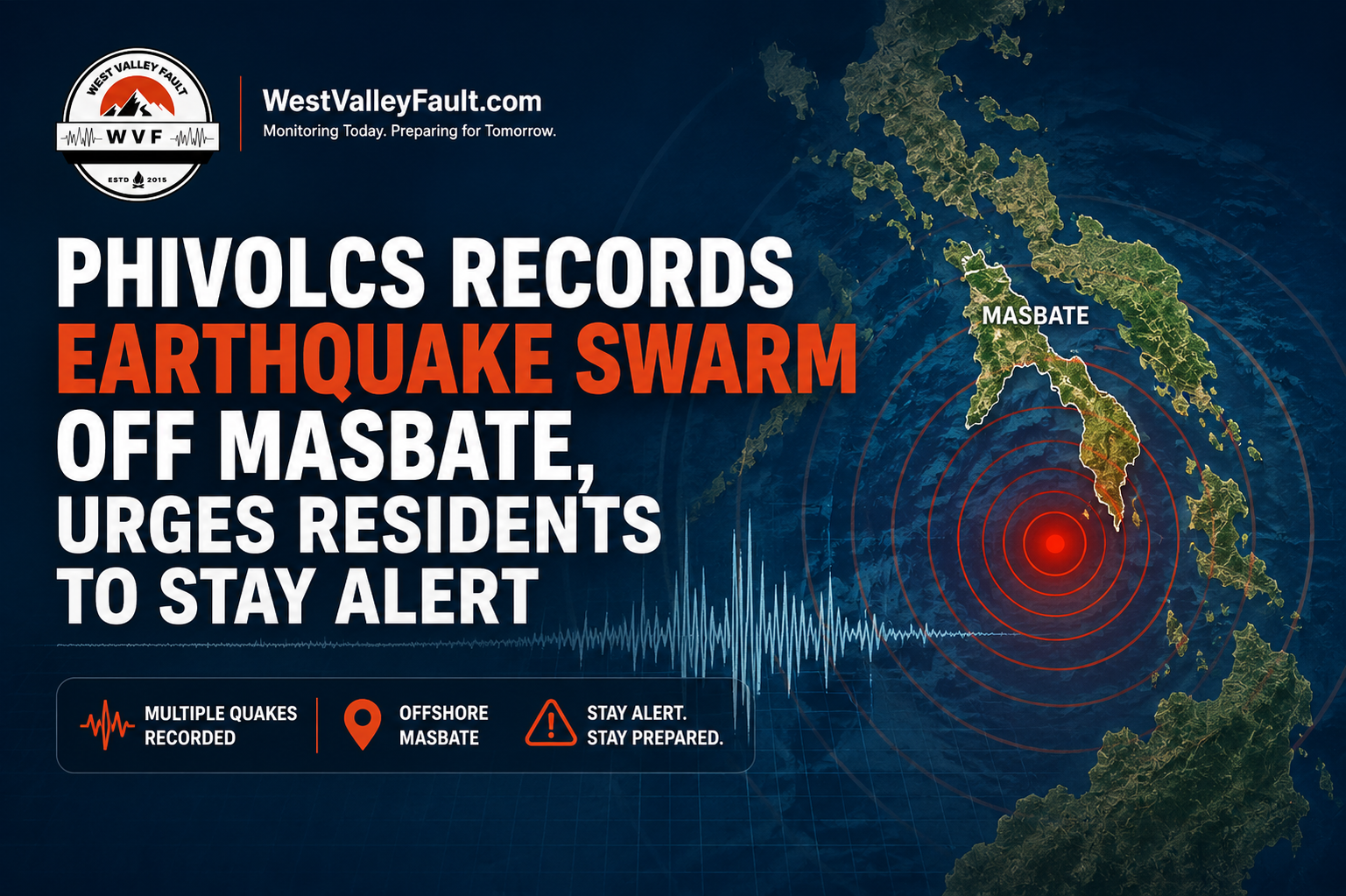
The Philippine Institute of Volcanology and Seismology (PHIVOLCS) has recorded an earthquake swarm offshore of Claveria, Masbate, prompting the agency to advise residents to remain alert for further seismic activity.
The swarm began at 8:52 a.m. on July 13, 2026. By 4:00 p.m. on July 14, the Philippine Seismic Network had detected 54 earthquakes in the area.
Of these, 28 earthquakes had been located and five were felt by residents. The strongest reported shaking reached Intensity V, classified by PHIVOLCS as “strong.”
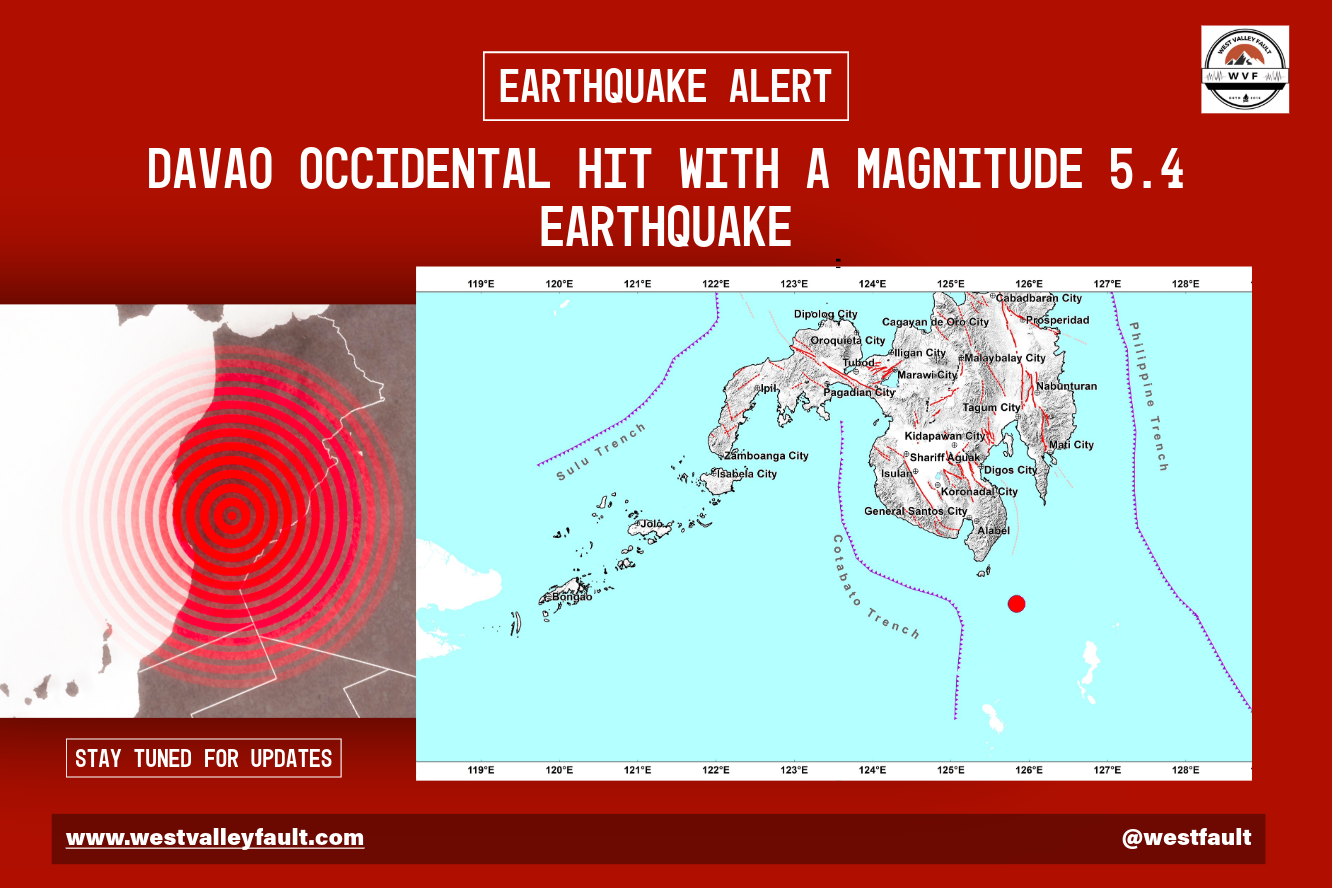
The sequence included several moderate earthquakes, with the strongest reaching magnitude 5.4.
What Is an Earthquake Swarm?
An earthquake swarm is a series of earthquakes occurring within a relatively small area over a limited period. Unlike a typical mainshock-and-aftershock sequence, a swarm may contain several earthquakes of comparable magnitude without one clearly dominant event.
PHIVOLCS explained that the activity off Claveria is tectonic in origin and is associated with movement along offshore faults near Masbate.

Source: Phivolcs GIS Portal
Masbate is situated within a seismically active part of the Philippines and is traversed by segments of the Philippine Fault system. The province has experienced destructive earthquakes in the past, including the magnitude 6.6 earthquake that struck in August 2020.
Does the Swarm Mean a Bigger Earthquake Is Coming?
Not necessarily.
An earthquake swarm does not, by itself, mean that a stronger or destructive earthquake is imminent. Many swarms gradually subside without producing a major event, and current science cannot reliably predict the exact time, location and magnitude of an earthquake.
PHIVOLCS is continuing to monitor the activity. Residents should rely on official bulletins and avoid claims suggesting that the swarm proves a much larger earthquake is about to occur.
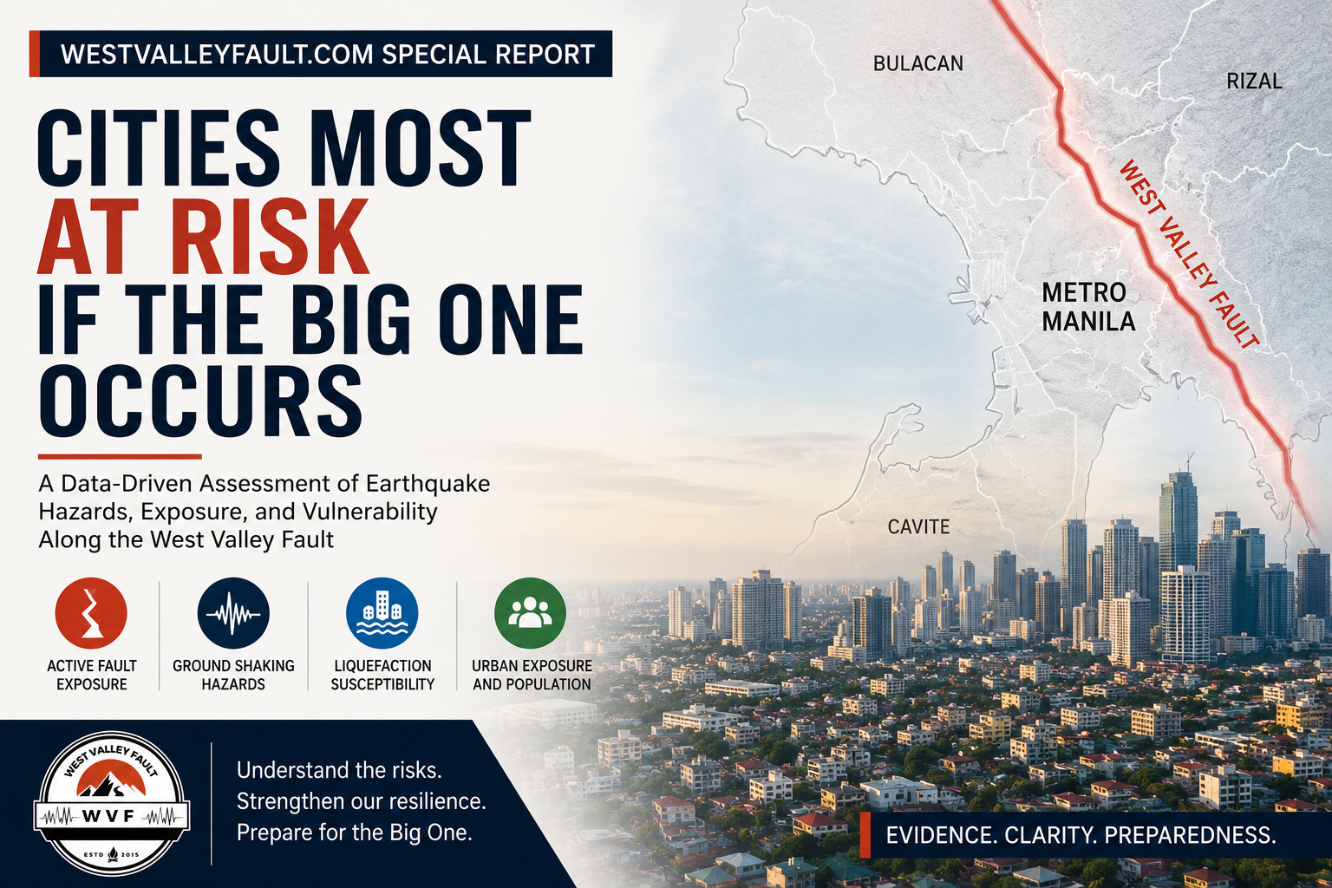
Whether an earthquake occurs as part of a swarm or as a single large event, the underlying lesson remains the same: communities cannot control when earthquakes happen, but they can reduce their consequences through resilient buildings and better preparedness. We explore that challenge in our Special Report, The Big One Is Not the Biggest Threat—Our Buildings Are.

What Should Residents Do?
PHIVOLCS urged residents of Masbate and nearby areas to remain alert and prepared for additional earthquakes. Households should:
- Secure objects that could fall during strong shaking.
- Review family emergency and evacuation plans.
- Prepare emergency supplies and a go bag.
- Inspect buildings for cracks or possible damage after felt earthquakes.
- Practice “Drop, Cover and Hold On.”
- Follow updates from PHIVOLCS and local disaster authorities.
Build your 72-hour kit before The Big One hits. Follow the guide we set up here: Preparing for the Big One: Essential Earthquake Survival Kit for Filipinos
Preparedness is especially important in coastal communities. After any strong or prolonged earthquake, residents should recognize natural tsunami warning signs and immediately follow official evacuation instructions.
The Bottom Line
The earthquake swarm off Claveria deserves continued monitoring, but it should not be treated as proof that a major earthquake is imminent.
The proper response is vigilance—not panic. Residents should stay informed, review their emergency plans and be ready to act if stronger shaking occurs.
Ensure your family’s safety.

Take the next step in your preparedness journey.
Download the FREE West Valley Fault™ Quick Start Guide and begin building your family’s emergency plan today.
Recommended Further Reading
- Magnitude 5.2 Earthquake Reported in Masbate
- Magnitude 5.4 Earthquake Rocks Masbate Area
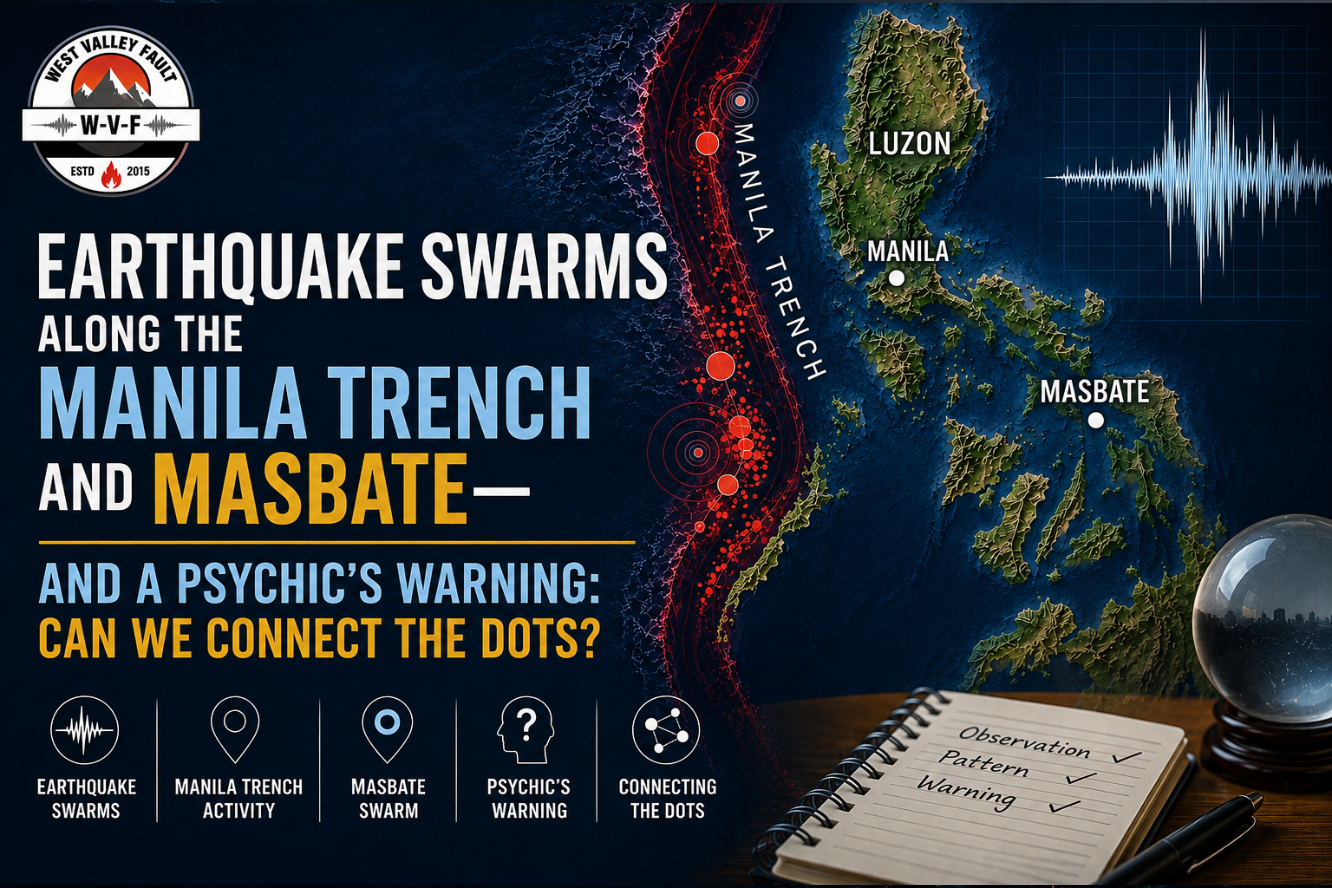
- 152 Earthquakes Along the Manila Trench: What PHIVOLCS Says—and What It Doesn’t
- Is Your Home Fault-Line Ready?
Sources: Philippine News Agency, Manila Bulletin, and DOST-PHIVOLCS.

















Leave a Reply