
“Did You Know? #003— Earthquake Facts Explained
The Philippines Is Crisscrossed by Hundreds of Active Faults
Did you know that the Philippines sits on a complex network of active fault lines, making it one of the most earthquake-prone countries in the world?
The country lies along the boundary of several major tectonic plates, including the Philippine Sea Plate and the Eurasian Plate. As these massive plates constantly push, pull, and slide past one another, stress builds up within the Earth’s crust. When that stress is suddenly released, an earthquake occurs.

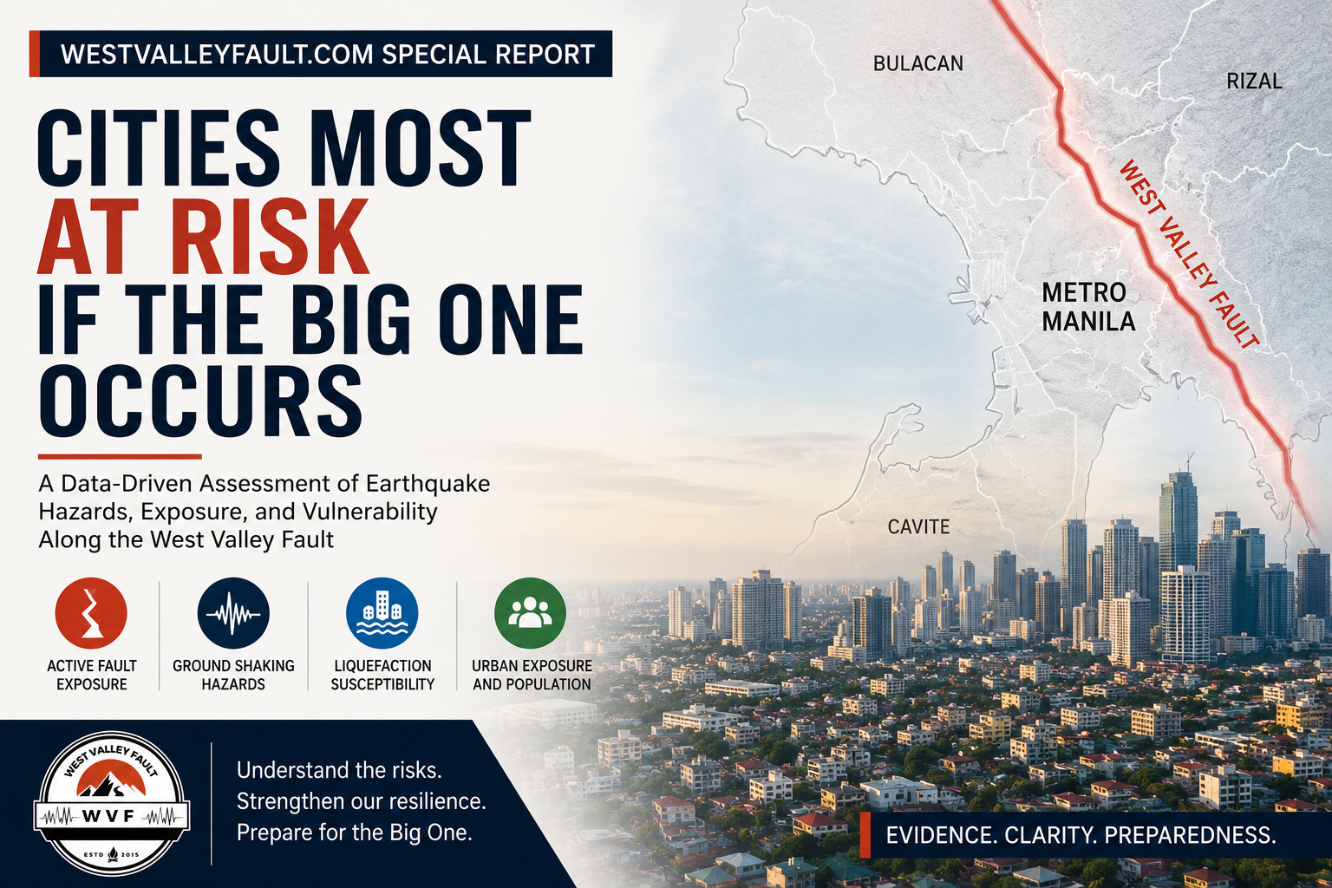
Running across the archipelago are hundreds of mapped active faults, including the 1,200-kilometer-long Philippine Fault System, one of the country’s most significant geological structures. Another well-known fault is the West Valley Fault, which passes through parts of Metro Manila and nearby provinces. Scientists warn that this fault is capable of generating a magnitude 7.2 earthquake, often referred to as “The Big One.”
Not every fault produces earthquakes regularly. Some remain quiet for decades or even centuries before suddenly rupturing. That is why scientists continuously monitor active faults, update hazard maps, and study past earthquakes to better understand future risks.
Knowing where active faults are located doesn’t mean living in fear—it means understanding the hazards around us and preparing for them before the ground starts shaking.
Planning to buy a home or relocate?

Before making a decision, download the Home Buyer’s Earthquake Risk Guide and learn the four official checks that can reveal hidden earthquake hazards.
A location does not need to sit directly on an active fault to face earthquake hazards. Use this practical checklist to investigate a property before buying, renting or relocating.
✓ Check active fault proximity
✓ Review shaking, liquefaction, tsunami and landslide hazards
✓ Examine building safety and community preparedness
✓ Find the official government maps and documents to consult
Small disclaimer: This checklist is an educational screening tool—not an official hazard assessment or guarantee of safety.
Quick Fact
📍 Mapped Active Faults: Hundreds across the Philippines
🗺️ Longest Major Fault: Philippine Fault System (about 1,200 km)
⚠️ Most Well-Known Near Metro Manila: West Valley Fault
🌏 Why So Many? The Philippines lies where several tectonic plates interact.
Fun Fact: Most earthquakes in the Philippines occur without warning, and many happen on faults that people never see because they lie beneath forests, mountains, cities, or even the ocean floor. That’s why earthquake preparedness is important no matter where you live.
Source:
Phivolcs/Wikipedia/DOST
Did You Know? is a continuing educational series by WestValleyFault.com, sharing quick, evidence-based facts about earthquakes, geology, and disaster preparedness in the Philippines.











Leave a Reply