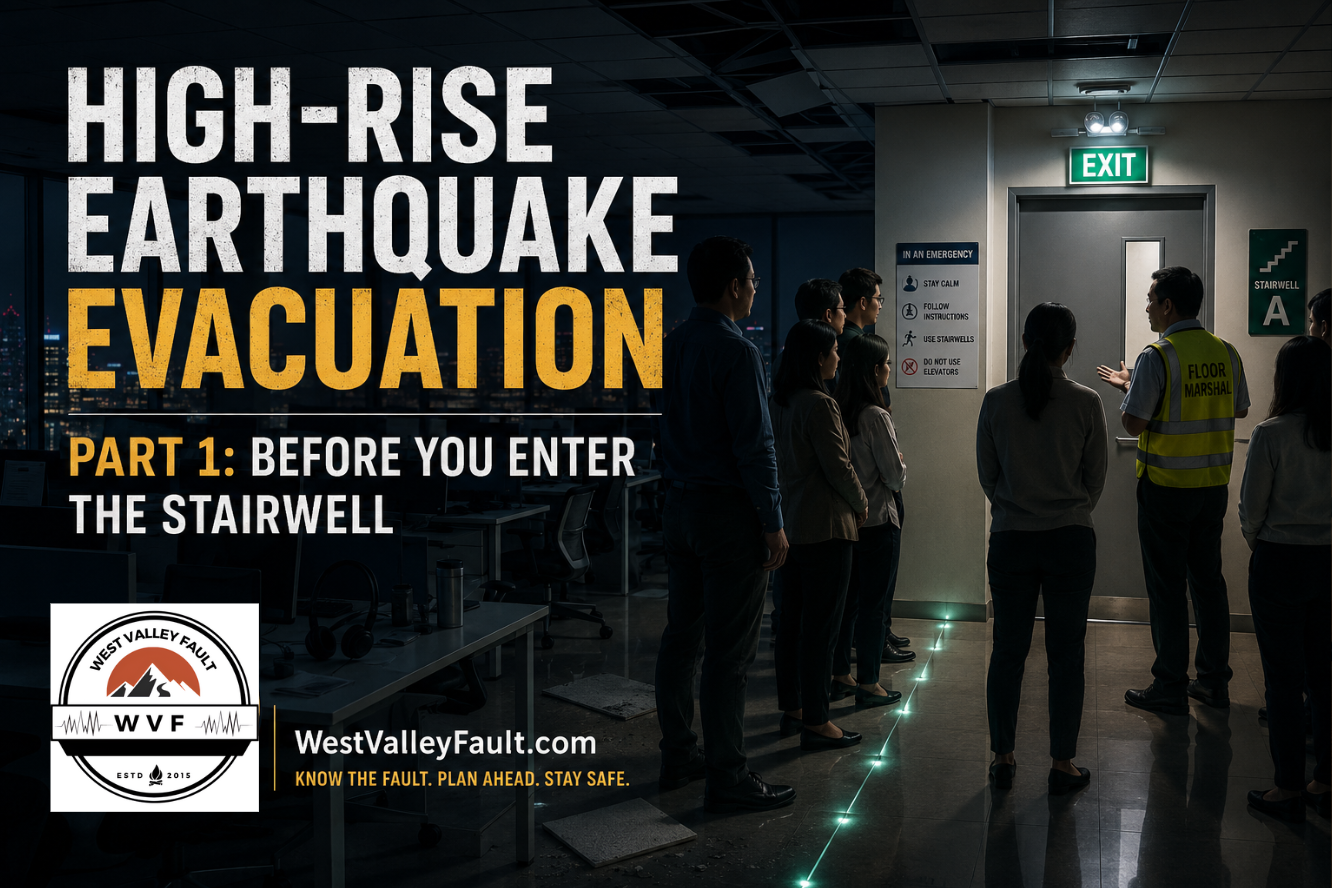
Two-Part Workplace Preparedness Series
Part 1: Before BPO Workers Enter the Stairwell
Part 2: Thirty Floors Down to Safety
Disclosure: Some product links in this article are affiliate links. Commissions help support the research and writing behind this site — at no additional cost to you. All recommendations are based on relevance to earthquake preparedness, not sponsorship.
Introduction — Thirty Floors Above the Street
Consider this preparedness scenario.
A strong earthquake strikes during the night shift inside a high-rise BPO tower. Thirty floors above the street, employees take cover beneath their workstations as monitors shake, chairs roll across the floor and suspended fixtures swing overhead.
Then the movement stops.
Normal lights have failed, although portions of the emergency-lighting system remain active. Several ceiling panels have fallen, office equipment has shifted and dust hangs in parts of the corridor. The elevators are no longer available for normal use. Mobile phones still show a signal, but calls are slow or unable to connect.
Hundreds of workers are waiting to be told what happens next.
Before you proceed.

Join the West Valley Fault preparedness community for practical earthquake guidance, workplace-readiness insights, and new reports delivered directly to your inbox.
As a welcome gift, you’ll also receive our FREE Earthquake Quick Start Guide.

Subscribe to continue reading
Subscribe to get access to the rest of this post and other subscriber-only content.